Set Screw vs Eccentric Locking Collar: Which Pillow Block Bearing Locking Method Is Better?
Set-screw and eccentric-collar locking both secure an insert bearing to a shaft, but they create that grip in different ways. A buyer choosing between EP-UCP and an eccentric-collar family such as EP-NAP should look beyond bore size and compare shaft condition, rotation, shock, service access and the machine’s existing locking arrangement.
There is no universal winner. The better method is the one that fits the shaft and duty without creating an unnecessary replacement problem later.
How set-screw locking works
On standard UC-style inserts, two set screws are located on the wide inner ring at 120-degree spacing. Tightening the screws creates direct point contact with the shaft. This is straightforward to install, works well on common straight-shaft applications and keeps the axial envelope compact.
The same direct contact can mark the shaft. Surface condition and torque therefore matter: under-tightening can allow movement, while excessive torque can deform or damage the locking area.
How eccentric-collar locking works
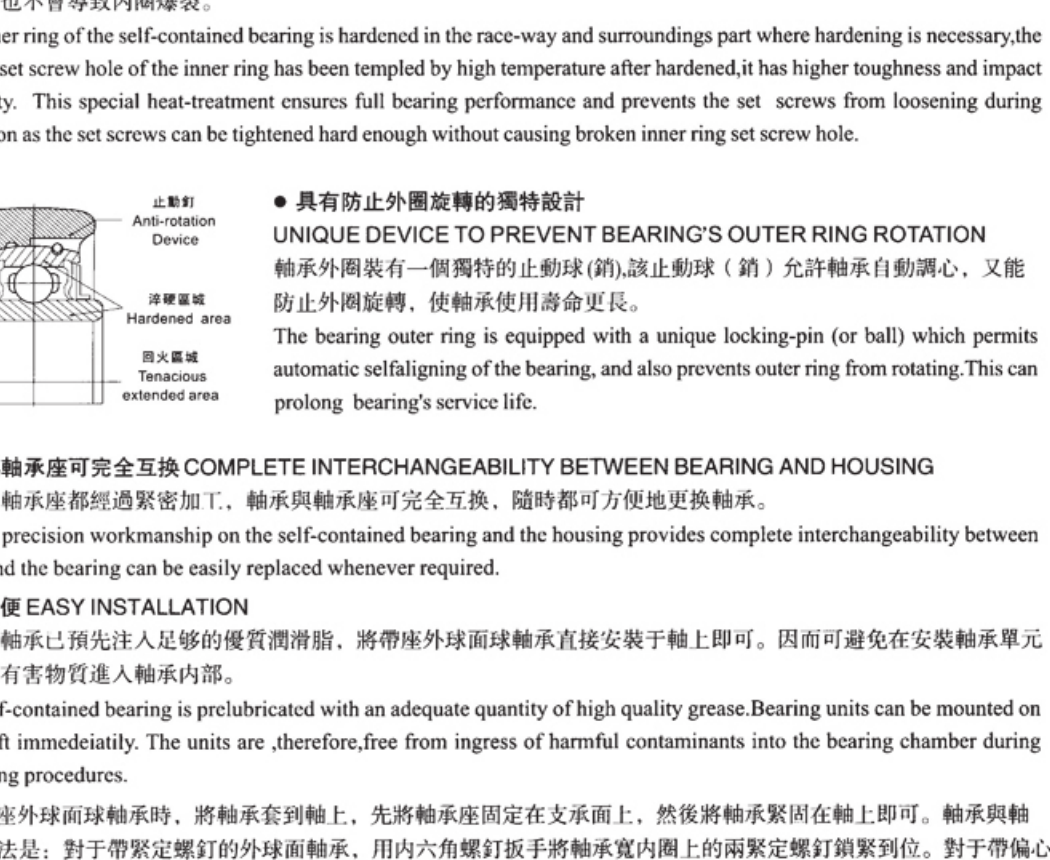
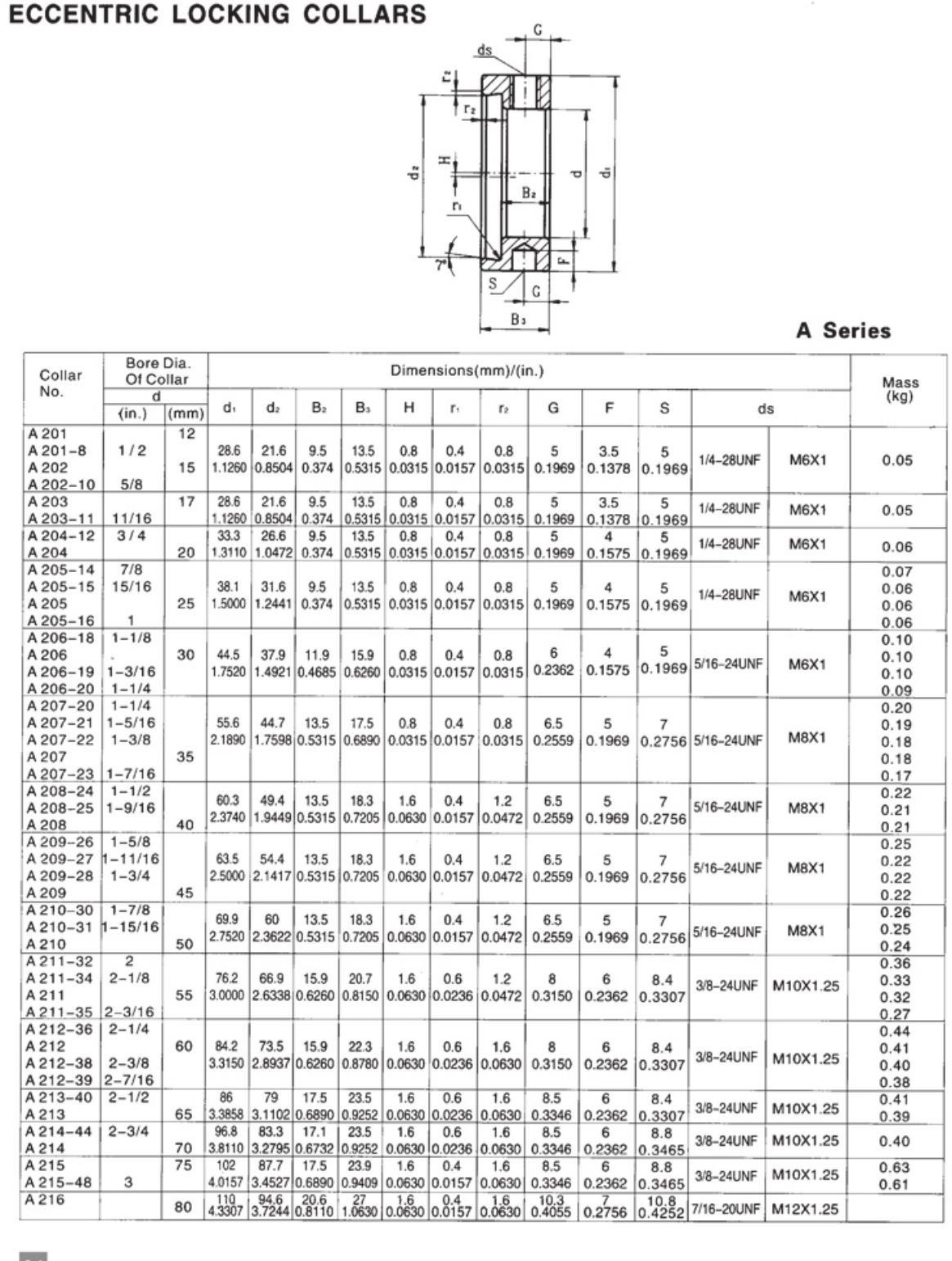
An eccentric-collar insert uses matching eccentric surfaces on the inner-ring extension and separate collar. Rotating the collar in the direction of shaft rotation wedges the pair together; a set screw then secures the collar position. The locking action is distributed differently from two screws pressing directly into the shaft.
Head-to-head comparison
| Decision point | Set-screw locking | Eccentric-collar locking |
|---|---|---|
| Installation | Direct: position unit and torque two screws | Seat collar, rotate in shaft direction, then secure collar screw |
| Shaft marking | Point contact from screws can mark shaft | Collar action can reduce reliance on two direct screw points |
| Direction awareness | Less dependent on rotation direction during locking | Collar is locked in the shaft rotation direction |
| Service familiarity | Very common on general UCP machinery | Common on agricultural and shock-oriented families |
| Replacement check | Confirm screw locations, insert width and bore | Confirm collar, insert eccentric geometry, width and bore |
| Changeover risk | Do not assume same-bore eccentric unit is a drop-in change | Do not assume same-bore UCP is a drop-in change |
When a set-screw UCP is the simpler choice
Set-screw locking is a practical default for many conveyors, fans, rollers and general industrial shafts with moderate loading and a clean, serviceable shaft surface. It is also convenient where maintenance teams already stock the matching UC insert and have established torque procedures.
When an eccentric collar deserves attention
The planning range associates eccentric-collar families with agricultural, mining and repeated shock or start-stop service. That can be a useful selection direction, but the final decision should still consider speed, shaft surface, direction of rotation and the exact insert/housing combination.
If the machine already uses an eccentric collar, replacing it with a set-screw unit can change shaft marking, axial position and service procedure even when the nominal bore matches.
EVER POWER family mapping
Set-screw locking is used across EP-UCP, EP-UCF, EP-UCFL and related UC-based housings. Eccentric-collar arrangements appear in EP-NAP, NA/SA-related insert families and their matching housings. Tapered EP-UK units use an adapter sleeve instead, so they should be treated as a third locking method rather than forced into either column.
Comparison by operating condition
| Condition | Set-screw family | Eccentric-collar family | What to verify |
|---|---|---|---|
| Steady unidirectional duty | Common and simple to install | Also possible where shaft arrangement matches | Shaft fit, speed and locking torque |
| Shock / frequent starts | Review risk of shaft marking or loosening | Often considered when the existing design uses eccentric locking | Direction of rotation, collar engagement and duty |
| Frequent disassembly | Set-screw marks can affect the shaft | Collar removal procedure becomes important | Maintenance practice and shaft condition |
| High speed | No universal winner | No universal winner | Insert rating, balance, lubrication and manufacturer data |
Shaft condition can decide the outcome
A locking method cannot compensate for a damaged or undersize shaft. Before changing systems, inspect the contact area for fretting, grooves, corrosion or previous set-screw damage. Measure the shaft rather than assuming it still matches its nominal drawing. If an eccentric collar is being used, verify the correct collar and direction of tightening; if set screws are used, verify the screw size and applicable torque for the insert.
Do not change locking method casually
Moving from UCP to NAP/SA or from an eccentric system back to set screws can alter installation space, shaft engagement and maintenance procedure. Treat the change as a configuration decision. Compare bore, insert width, housing dimensions and the complete machine interface before approving it.
Need a model checked against your machine? Send the dimensions with your RFQ.