How to Choose Between Pillow Block Bearing and Deep Groove Ball Bearing for Shaft Support
A pillow-block unit and a bare deep-groove ball bearing can both support a rotating shaft, but they belong to different design approaches. A housed insert-bearing unit arrives with its mounting housing, sealing and shaft-locking method; a bare bearing expects the machine designer to provide the housing, fits, seals and axial-location details.
The better choice depends on how much precision, compactness, field serviceability and housing design work the machine can support.
What a housed bearing unit adds
An EP-UCP-style pillow block provides a ready-to-mount base, grease access and a self-aligning spherical interface between the insert and housing. The shaft locks directly to the insert. This reduces the amount of custom housing machining required and makes field replacement straightforward when the machine is built around standard housed-unit dimensions.
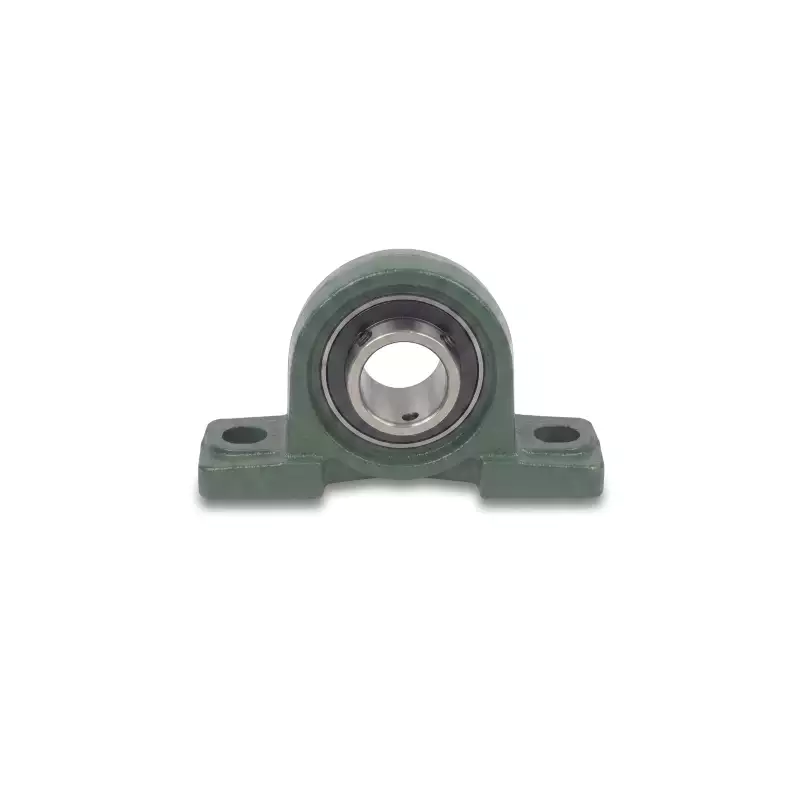
When a pillow block is usually appropriate
- Conveyors, agricultural shafts, fans, rollers and general machinery where a standard support can bolt to a frame.
- Equipment that benefits from replaceable, externally accessible bearing units.
- Moderate-speed applications where slight mounting error can be accommodated by the housed insert arrangement.
- OEM designs where avoiding a separately machined bearing housing reduces assembly complexity.
What a bare deep-groove bearing requires
A standard deep-groove ball bearing must be installed in a housing seat with controlled fits, axial shoulders or retainers, and a seal/lubrication system appropriate to the machine. That gives the designer more freedom to control stiffness, compactness and precision, but it also transfers more engineering work into the machine components.
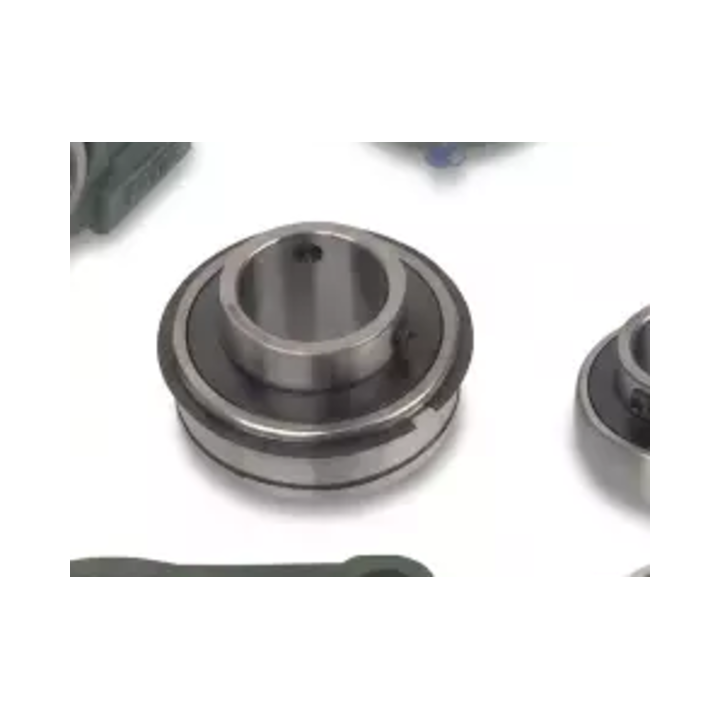
When a bare bearing in a custom housing is preferable
High-speed spindles, electric motors, compact gearboxes and precision machinery often need shaft and housing fits that are more tightly controlled than a general housed-unit installation. If the machine already has a machined bearing bore and integrated seals, adding a pillow block may be unnecessary or impossible.
Cost and maintenance trade-off
| Question | Pillow-block unit | Bare bearing + custom housing |
|---|---|---|
| Purchased assembly | Bearing + housing + lock as one service unit | Bearing only; machine provides housing/seals/retention |
| Housing machining | Minimal at bearing point | Required in machine design |
| Field replacement | Usually straightforward external unit replacement | May require disassembly of machine housing |
| Precision potential | Appropriate for general industrial support | Can be optimized for high precision / speed |
| Alignment accommodation | Spherical insert/housing interface provides self-alignment | Depends on housing/bearing design |
| Design flexibility | Standard housing geometry | High; designer controls housing and fits |
A selection question that settles many cases
Ask whether the machine needs a standard replaceable bearing support or an integrated precision bearing seat. If it is a conveyor shaft bolted to a frame, a housed unit is often efficient. If it is a spindle inside a compact gearbox, a bare bearing in a designed housing is more likely to fit the engineering problem.
The real comparison is system architecture
A pillow block is a packaged shaft-support system: housing, insert, sealing, lubrication access and mounting interface are combined. A bare deep-groove ball bearing is only the rolling bearing; the designer must provide a housing, fits, axial retention, seals and lubrication. The lower part cost of a bare bearing can therefore be offset by machining and assembly requirements.
Decision table
| Design need | Housed insert unit | Bare ball bearing in custom housing |
|---|---|---|
| Field replacement | Simple complete-unit replacement can be attractive | Requires access to housing and bearing assembly |
| Self-contained mounting | Housing is already part of product | Machine designer provides housing |
| High precision / high speed | Check whether insert-unit capability is sufficient | Custom housing often gives greater control |
| Moderate-speed conveyors / farm shafts | Common architecture | Possible but adds housing design work |
Do not retrofit by component cost alone
Changing from a housed unit to a bare bearing or the reverse changes shaft fits, seals, axial location and maintenance. Treat it as a machine redesign and review the complete support system.
Need a model checked against your machine? Send the dimensions with your RFQ.