Food Grade Pillow Block Bearings: Plastic Housing vs Stainless Steel — What to Choose?
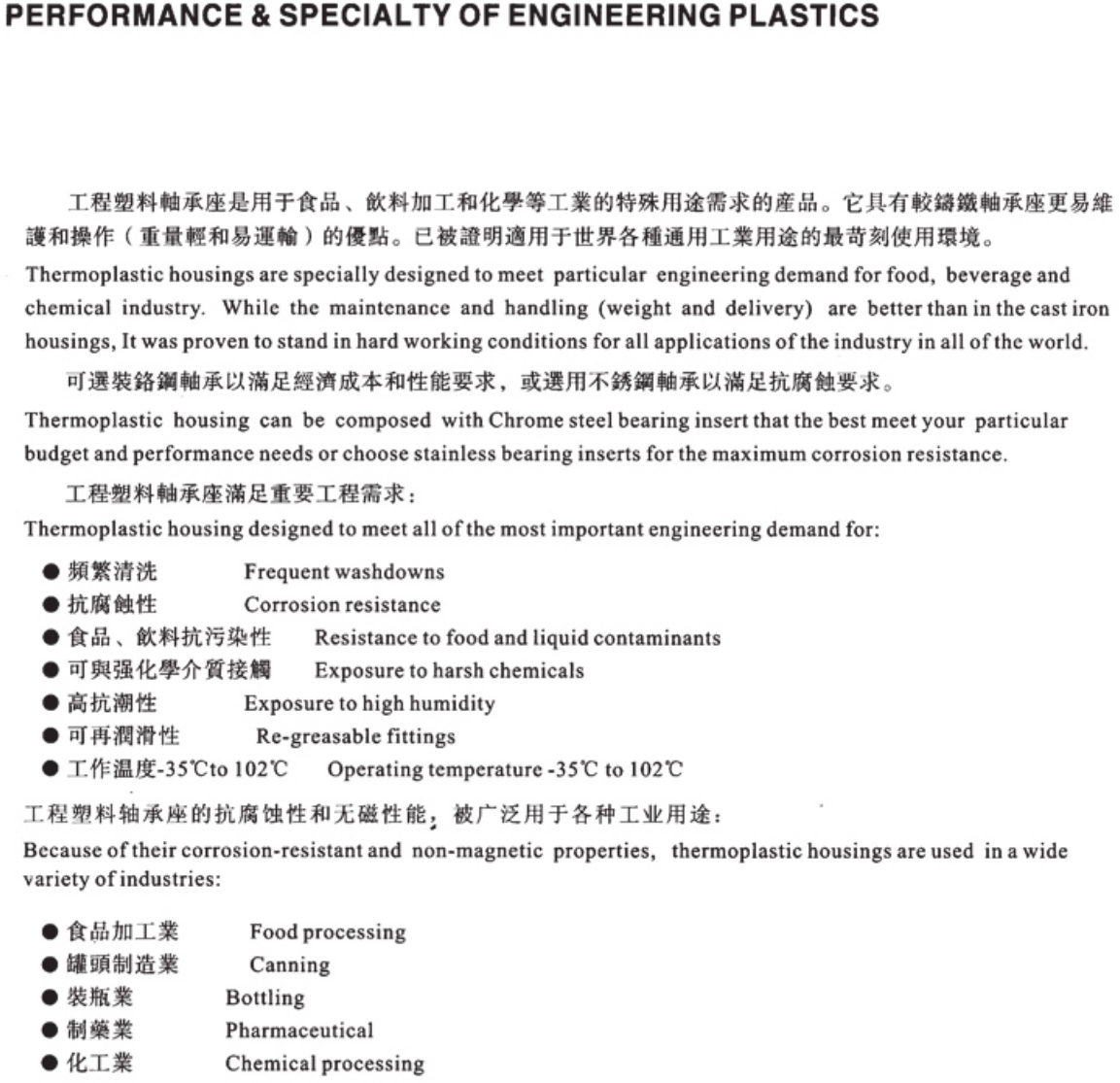
Food, beverage and pharmaceutical machinery often pushes the housing decision away from ordinary painted cast iron. Frequent washdown, humidity and chemical contact can make corrosion resistance and cleanability more important than simply choosing the highest housing stiffness.
“Food grade” should not be treated as a single material label. Housing material, insert material, seals, lubricant and the documentation required by the buyer all need to be specified as one assembly.
Engineering-plastic housing: where it fits
Thermoplastic housings are suited to food, beverage, canning, bottling, pharmaceutical and chemical-processing equipment where the environment matches the material limits. The material is presented as corrosion-resistant and non-magnetic, with suitability for frequent washdown, high humidity and contact with harsh chemicals. It also lists an operating-temperature reference of approximately -35°C to 102°C for the housing material.
Those properties make a plastic housing attractive where the casting itself would otherwise rust or where lower housing weight helps handling. Load, insert material and actual cleaning conditions still have to be checked.
PBT chemical resistance is condition-specific
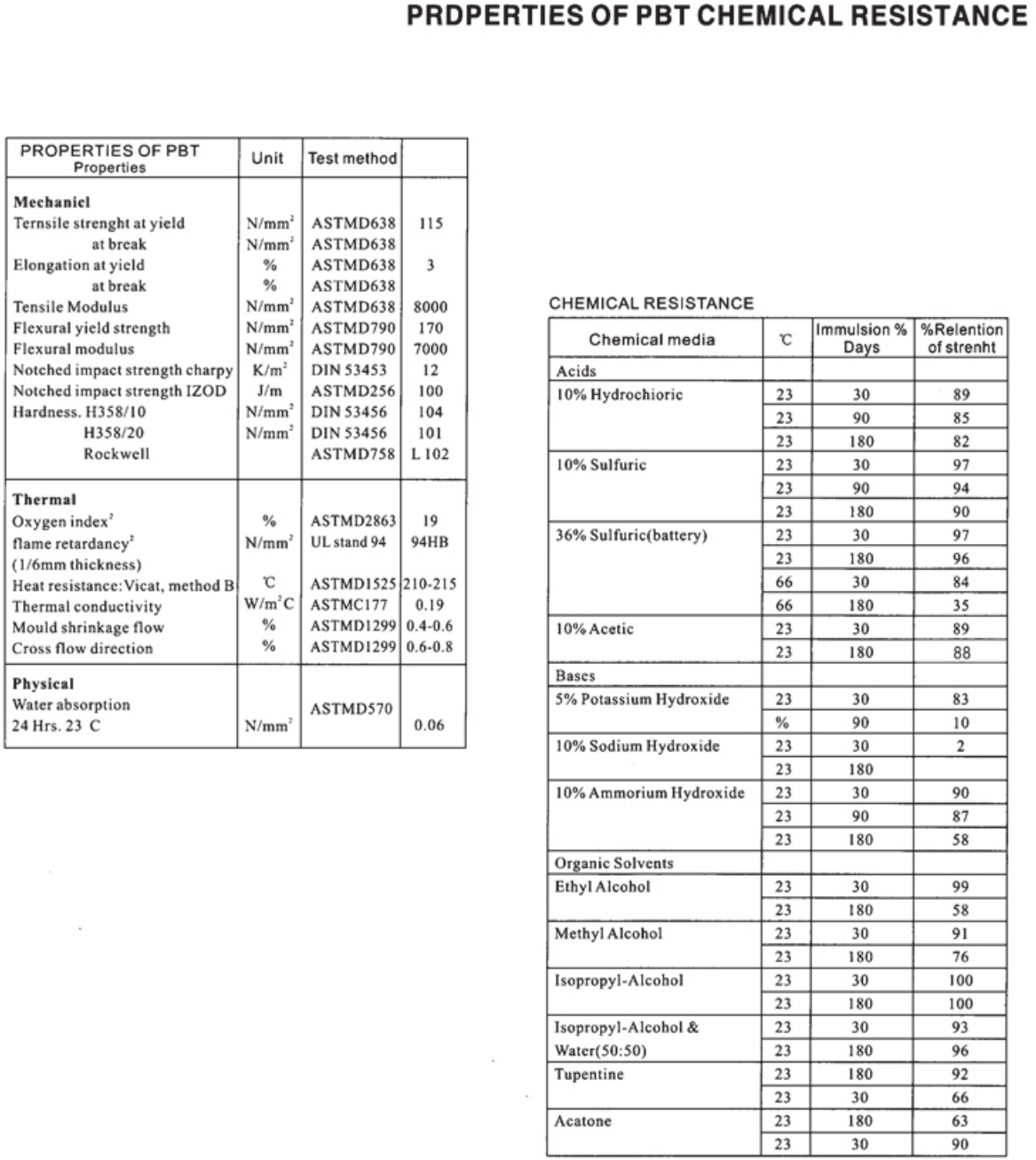
The PBT table in the supplied technical material reports retained-strength results for several acids, bases and solvents at specified concentrations, temperatures and immersion times. That is useful screening information, but it is not a blanket statement that every cleaner is harmless under every washdown process.
When selecting a housing for cleaning chemistry, send the chemical name, concentration, temperature, contact duration and frequency. A short rinse and a continuous hot immersion are different material problems.
Stainless insert vs chrome-steel insert
Thermoplastic housings can be combined with a chrome-steel insert for cost/performance balance or a stainless insert where greater corrosion resistance is required. This decision matters because a corrosion-resistant housing does not protect a conventional insert from direct water or chemical attack.
Plastic, cast iron and stainless-oriented assemblies
| Selection factor | Engineering-plastic housing | Painted cast-iron housing | Stainless-oriented assembly |
|---|---|---|---|
| Corrosion exposure | Strong reason to consider | Needs coating/environment review | Strong reason to consider |
| Frequent washdown | Designed for washdown-oriented use | Requires seal/coating review | Common reason to specify |
| Housing stiffness / heavy load | Confirm limits carefully | Generally the stronger conventional choice | Depends on exact housing design |
| Weight | Light | Heavier | Configuration dependent |
| Cleaning chemistry | Check PBT compatibility by concentration/temperature | Check coating and insert compatibility | Check stainless grade, seal and lubricant |
| Documentation | Confirm ordered configuration | Confirm ordered configuration | Confirm ordered configuration |
Do not infer regulatory approval from the housing material
If the machine requires food-lubricant documentation, hygiene declarations, material certificates or a specific customer standard, state that requirement in the RFQ. A PBT housing or stainless insert does not by itself prove that the complete bearing unit satisfies every food-contact or hygienic-design rule.
EVER POWER plastic-housing families
The product plan includes S.UCP-style pillow blocks, S.UCF square flanges, S.UCFL oval flanges and S.UCPA tapped-base housings. Choose among them first by mounting geometry, then by bore, load and washdown environment. For replacements, measure the original bolt pattern and projection just as carefully as you would on a cast-iron unit.
Map the hygiene zone before choosing material
A bearing beside a packaged-food conveyor has different requirements from a bearing exposed to direct product contact or high-pressure washdown. Define the zone, cleaning chemical, water temperature and lubricant requirement first. Engineering-plastic housings can be attractive for corrosion resistance, but the insert, fasteners, seals and grease must be considered as part of the complete unit.
Material comparison should include load and temperature
| Housing approach | Typical advantage | Key limitation to check |
|---|---|---|
| Cast iron | Rigidity and broad general-machinery use | Corrosion / washdown exposure and coating condition |
| Engineering plastic | Corrosion resistance and low mass | Load, temperature and chemical compatibility |
| Stainless / corrosion-resistant configuration | Improved resistance in wet service | Exact material grade, load and lubricant requirement |
Compliance wording belongs in the RFQ
If the end user requires NSF H1 lubricant, a material declaration, RoHS/REACH documentation or another project document, state that requirement explicitly. Do not assume that the phrase “food grade bearing” proves the final assembly meets a plant’s hygiene or regulatory program.
Need a model checked against your machine? Send the dimensions with your RFQ.