Disk Harrow Bearing Units: 209 and 211 Series for Agricultural Tillage Equipment
Disk harrow bearing units operate close to the soil, where shock, abrasive dust, mud and water can be more severe than on a protected conveyor or factory shaft. The bearing support is also tied directly to the gang assembly, which is why dedicated disk-harrow units exist instead of treating the position as a generic pillow-block application.
Tri-ply 209 and 211 series disk-harrow units are available with round- and square-bore variants.
What makes a disk-harrow unit different
The housing and sealing arrangement are shaped for the gang assembly rather than a conventional two-bolt pillow-block base. The unit must fit the harrow frame and gang bolt, while the seal system has to handle field contamination that reaches the bearing from every direction.
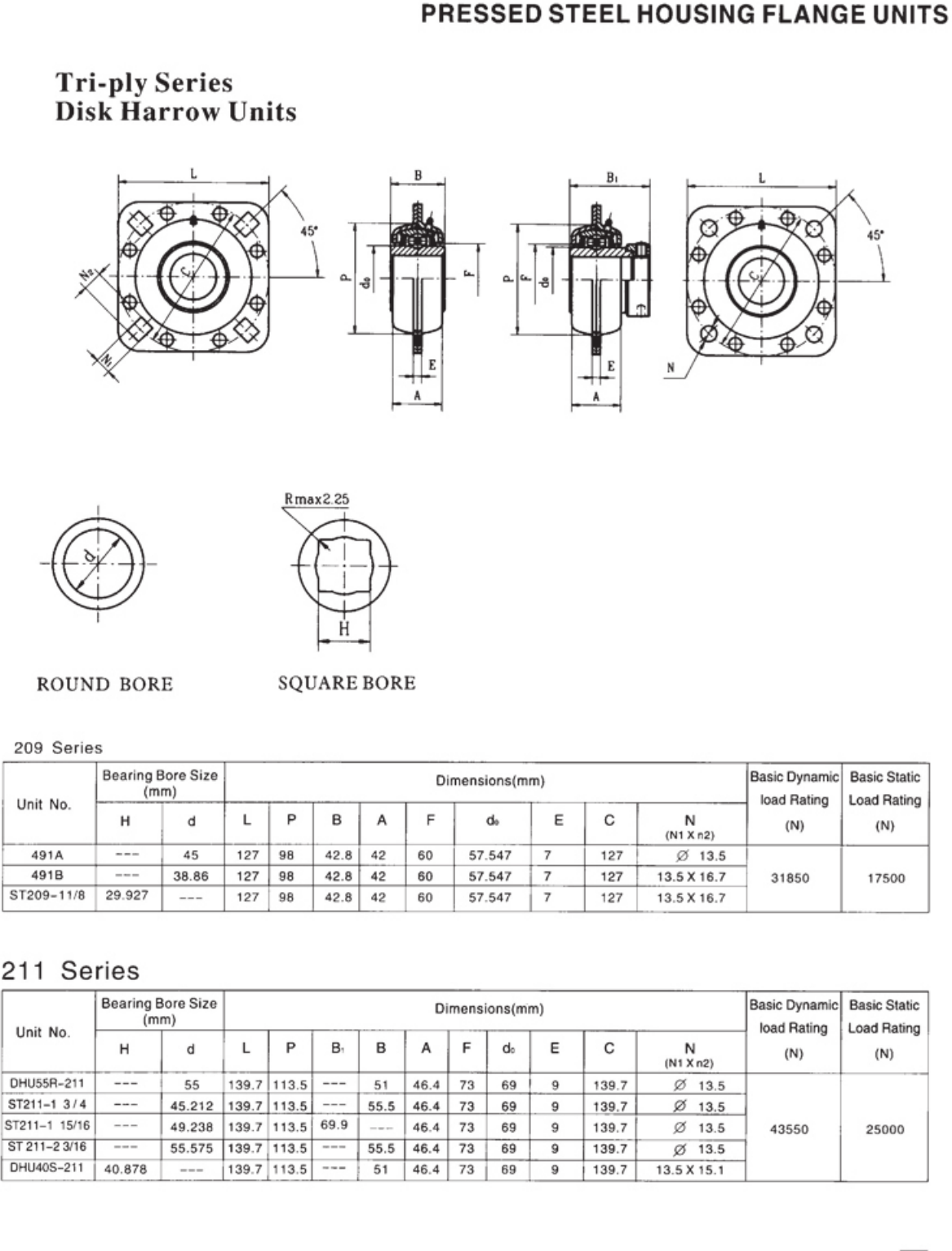
209 and 211 series
The 209-series group includes 491A/491B and related references, while the 211-series includes DHU/ST variants. Both groups include dimension tables and basic dynamic/static load ratings. Use the exact row for the machine rather than applying one model’s dimensions to the whole family.
Round bore vs square bore
Round-bore and square-bore options fit different gang-bolt constructions. A square-bore bearing must match the across-flat geometry and corner radius of the shaft/bolt; a round-bore unit follows a conventional cylindrical interface. Photographing the old bore shape before removal is often as useful as the model number.
Tri-ply sealing
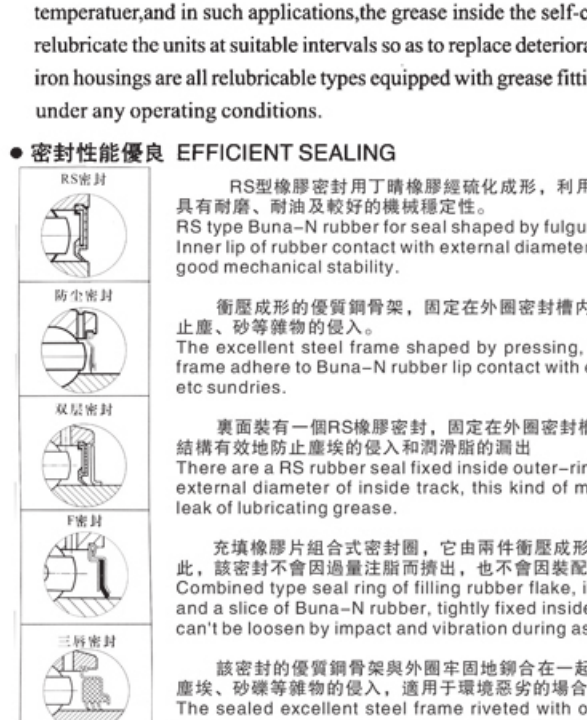
The disk-harrow family uses a tri-ply sealing package intended to resist soil, moisture and field contamination. That severe-duty seal should be considered part of the complete unit. Replacing the unit with a lighter generic seal can change service behavior even if the bore appears to fit.
Installation checks on the gang
- Confirm round or square bore and the exact gang-shaft dimensions.
- Check housing orientation and mounting pattern before tightening the gang assembly.
- Make sure the bearing is not forced into angular error by a bent gang bolt or distorted frame.
- Use the machine manufacturer’s gang-bolt clamping procedure; the bearing table is not a substitute for the implement fastener specification.
- Inspect sealing and grease condition after work in wet or abrasive soil.
What to send for a replacement quote
| Information | Purpose |
|---|---|
| Old unit number / photo | Identifies 209 vs 211 family and construction |
| Bore shape and size | Separates round and square gang interfaces |
| Housing dimensions / bolt pattern | Confirms fit to harrow frame |
| Machine brand/model if available | Adds application context without replacing dimensions |
| Field condition | Explains mud, water and shock exposure |
Disk-harrow bearings are a machine-specific family
A disk-gang bearing sees soil, mud, impact and a different housing arrangement from a general conveyor pillow block. The 209 and 211 families in the catalogue should therefore be selected from gang-shaft geometry, housing dimensions and seal construction. Do not substitute a standard UCP merely because the bore is similar.
Round versus square bore
Some harrow designs use round shafts or gang bolts; others use square interfaces that positively transmit position. Measure the actual bore shape and across-flat / diameter dimensions. Also compare the housing mounting points and disc-gang spacing so the replacement preserves alignment through the gang.
Seal and maintenance considerations
Mud and abrasive soil can damage a seal rapidly if the scraper / lip arrangement is wrong or if debris is packed against the housing. Inspect the seal after wet-field work, clean accumulated soil and check for looseness at the gang. If a tri-ply or multi-lip arrangement is specified, confirm the exact ordered construction rather than relying on a generic suffix.
Need a model checked against your machine? Send the dimensions with your RFQ.