Cast Iron vs Pressed Steel vs Engineering Plastic: Which Pillow Block Housing Should You Choose?
Housing material changes the stiffness, weight, corrosion behavior and cleanability of a bearing unit. A cast-iron pillow block is a strong general-purpose choice, pressed steel reduces weight for lighter duty, and engineering plastic becomes attractive when washdown or corrosion drives the design.
The insert bearing still carries the rolling load, but the housing determines how that load reaches the machine structure and how well the assembly survives its environment.
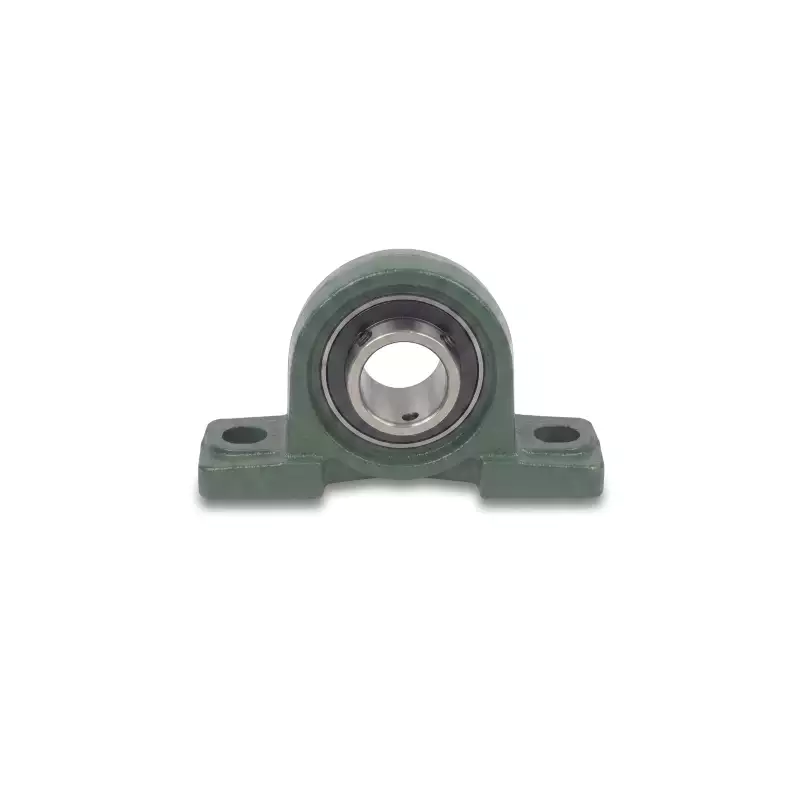
Cast-iron housings
The supplied bearing-unit material describes cast-iron housings as solid one-piece structures intended to provide rigidity and wear resistance. This construction suits general industrial machinery, agriculture, conveyors and other positions where the housing must hold the shaft line under normal machine loading.
Paint protects the exterior, but a conventional cast housing still needs environment review when exposed to frequent chemical washdown or persistent moisture.
Pressed-steel housings
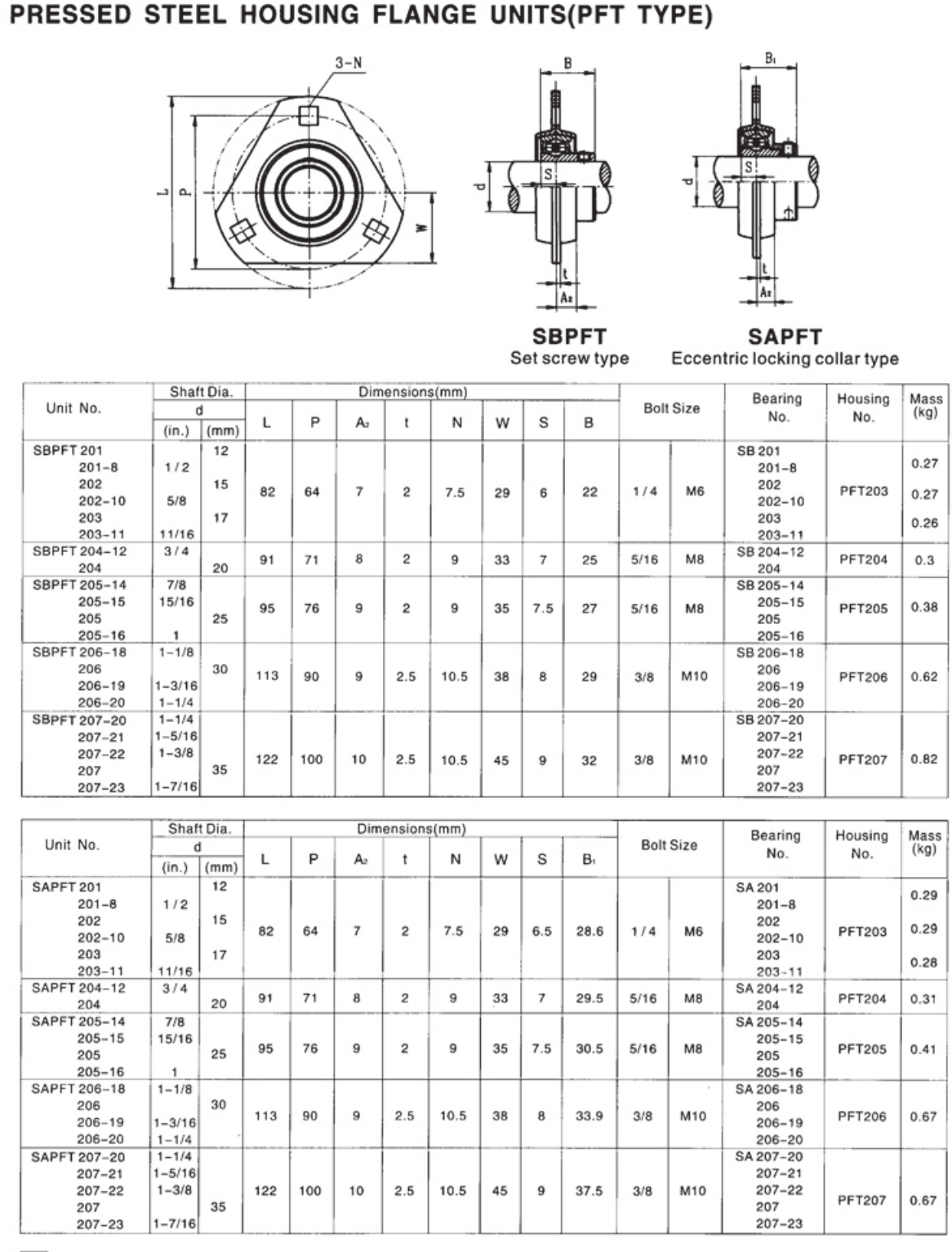
Pressed-steel units are formed from steel plate rather than a thick casting. They are lighter and can be economical for packaging equipment, light conveyors and other lower-duty support points. The trade-off is lower housing stiffness and a smaller duty envelope than a robust cast housing.
Engineering-plastic housings
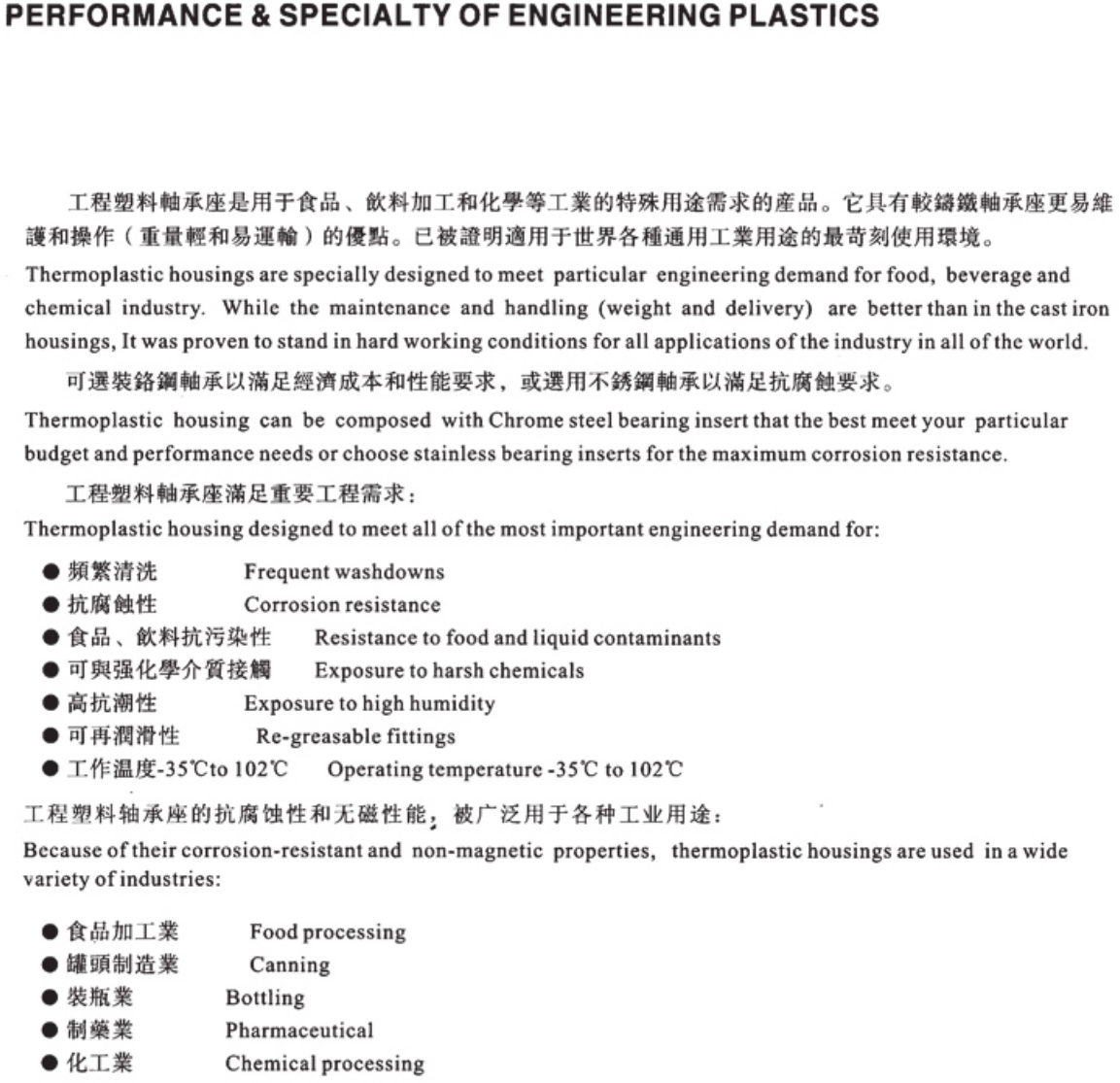
Thermoplastic/PBT housings suit applications where frequent washdown, corrosion resistance, high humidity or chemical exposure drive the housing choice. They are also lighter and non-magnetic. Food processing, canning, bottling, pharmaceutical and chemical-processing applications are specifically listed as use contexts.
Do not treat “plastic” as a universal solution. The load, operating temperature, cleaning chemistry, insert material and seal arrangement still have to be checked together.
Comparison for selection
| Factor | Cast iron | Pressed steel | Engineering plastic |
|---|---|---|---|
| Housing rigidity | High general-purpose rigidity | Lower; suited to light-duty structures | Configuration dependent; verify load limits |
| Weight | Heavier | Light | Light |
| Corrosion / washdown | Coating and insert need review | Surface protection needs review | Strong reason to consider |
| Typical duty | General to heavier industrial | Light machinery | Washdown/corrosive environments |
| Mounting forms | Wide range: pillow, flange, take-up, cartridge | Selected pillow/flange styles | Pillow, square/oval flange, tapped-base families |
| Key RFQ detail | Load, mounting dimensions, environment | Load and frame stiffness | Chemical, temperature, insert/seal/lubricant |
What about special alloys or ductile/nodular housings?
Some heavy-duty housing families may use tougher casting specifications or special materials, but material should be confirmed on the ordered configuration rather than inferred from a series name. If impact resistance, stainless construction or a particular grade is mandatory, put the grade or performance requirement into the RFQ.
A simple decision rule
Start with cast iron when the environment is conventional and structural stiffness is the priority. Consider pressed steel when the duty is light and weight/cost are dominant. Move toward engineering plastic or stainless-oriented configurations when repeated washdown and corrosion risk become the primary problem. Then verify that the selected housing shape still matches the machine interface.
Choose housing material from the load path and environment
| Housing material | Best reason to consider it | Questions before selection |
|---|---|---|
| Cast iron | Rigid general-purpose support | Load, shock, corrosion exposure, mounting stiffness |
| Pressed steel | Lightweight light-duty support | Housing distortion, load, vibration and frame rigidity |
| Engineering plastic | Corrosion-sensitive / washdown-adjacent service | Chemical compatibility, temperature, load and fastener practice |
Insert material is a separate decision
The housing material does not automatically define the bearing insert, seals or lubricant. A plastic housing with a standard insert may behave differently from a fully corrosion-resistant configuration. State each required material and the operating environment in the RFQ instead of using one shorthand phrase such as “stainless bearing.”
Mounting stiffness can overturn the material choice
A rigid housing mounted on a flexible or distorted plate can still create alignment problems. Conversely, a light stamped housing used in a heavy shock position may deform even if the insert itself has adequate bearing capacity. Evaluate the housing, fasteners and machine frame as one load path.
Need a model checked against your machine? Send the dimensions with your RFQ.