Bearing Units for the Mining Industry: Heavy-Duty Selection Guide
Mining and quarry equipment combines high shock, vibration, abrasive dust, heavy belt or material loads and difficult maintenance access. A bearing unit that is easy to install in a workshop can become a major downtime risk when the same component is buried under guards at a crusher, screen or remote conveyor.
Selection should therefore prioritize the real failure mechanisms: shaft locking, seal exclusion, load capacity, lubrication access and maintainability.
Mining bearing challenges
Crushers and screeners create vibration and shock. Conveyors expose bearings to dust and belt pull over long running periods. Bucket elevators add tension and vertical material handling, while fans and auxiliary shafts can run at higher speed. One “heavy-duty” label cannot describe all of those positions.
Locking method under vibration
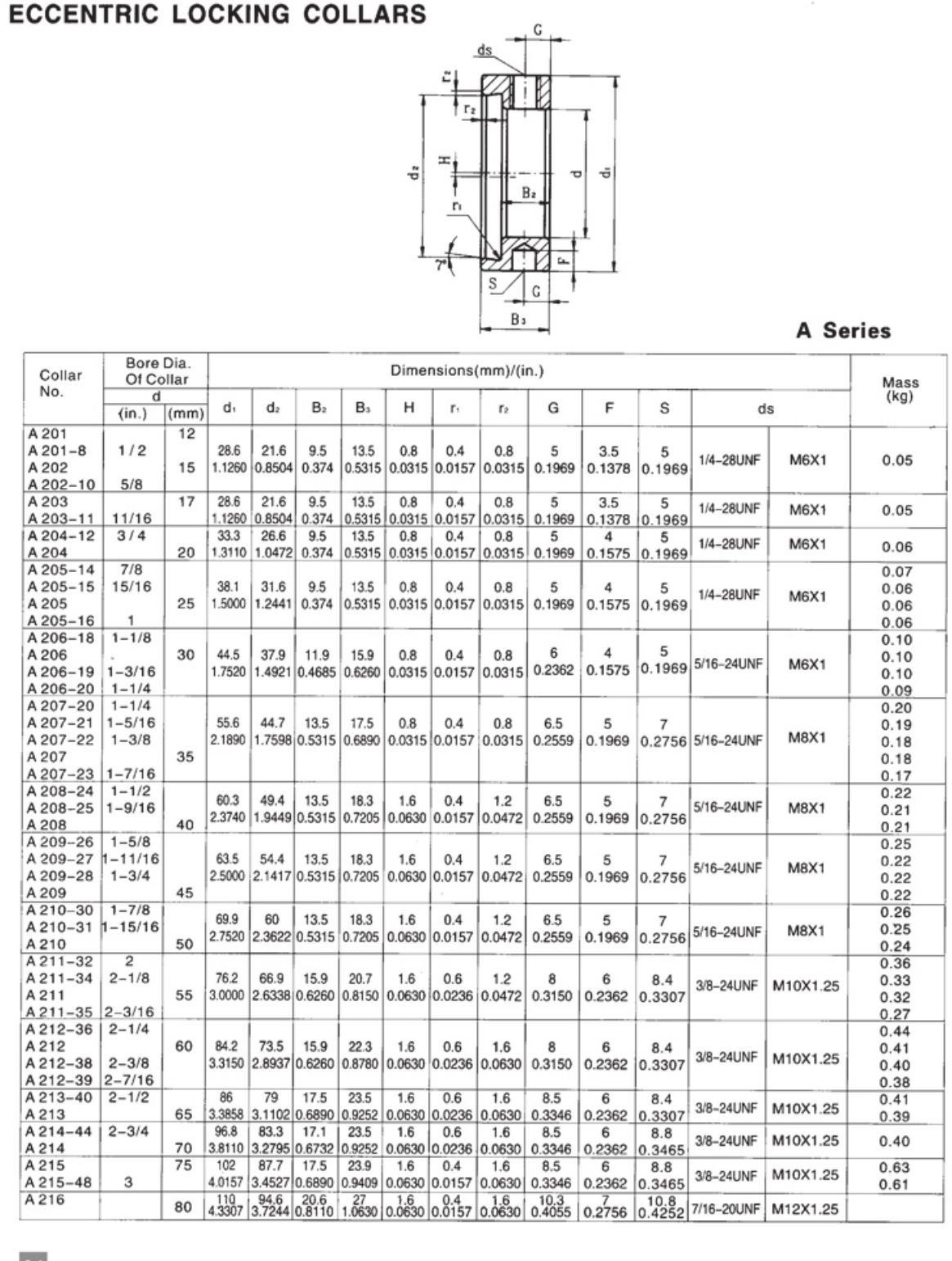
The planning framework highlights eccentric-collar NAP-style and adapter-sleeve UKP+H units for applications where vibration or shock makes shaft retention a central concern. A set-screw UCP can still be correct in many positions, but the shaft surface, torque, rotation and service history should be reviewed before repeating the same locking method on a position that has loosened repeatedly.
Sealing against abrasive contamination
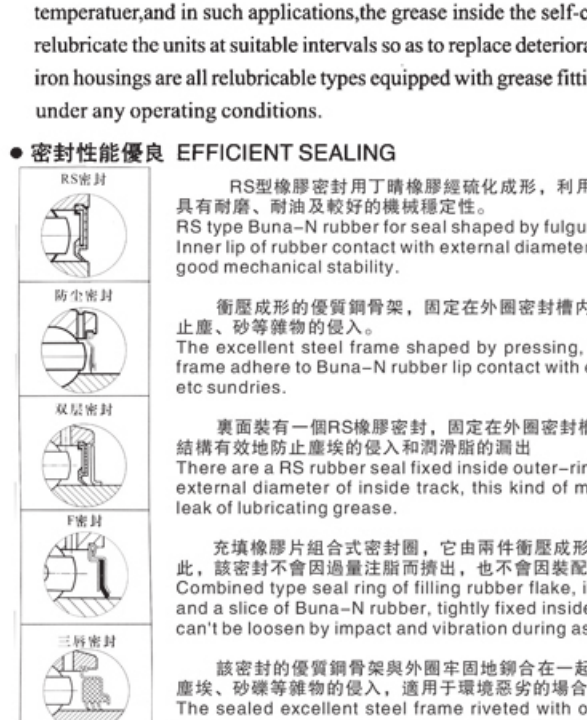
Dust that reaches the raceways shortens bearing life even when the calculated load is modest. Multi-lip or other enhanced exclusion systems can be considered where standard contact seals are not enough. Labyrinth concepts may reduce friction in suitable high-speed positions, but they should not be treated as an automatic replacement for contact sealing in heavy dust.
Bearing capacity and series choice
Use the exact insert dynamic rating, actual bearing reaction and speed to calculate the basic life. If the existing 200-series insert is undersized, a larger/heavier series may be appropriate, but changing series also changes housing dimensions. Check centre height, bolt pattern and available clearance before planning an upgrade.
Adapter-sleeve units for maintainability
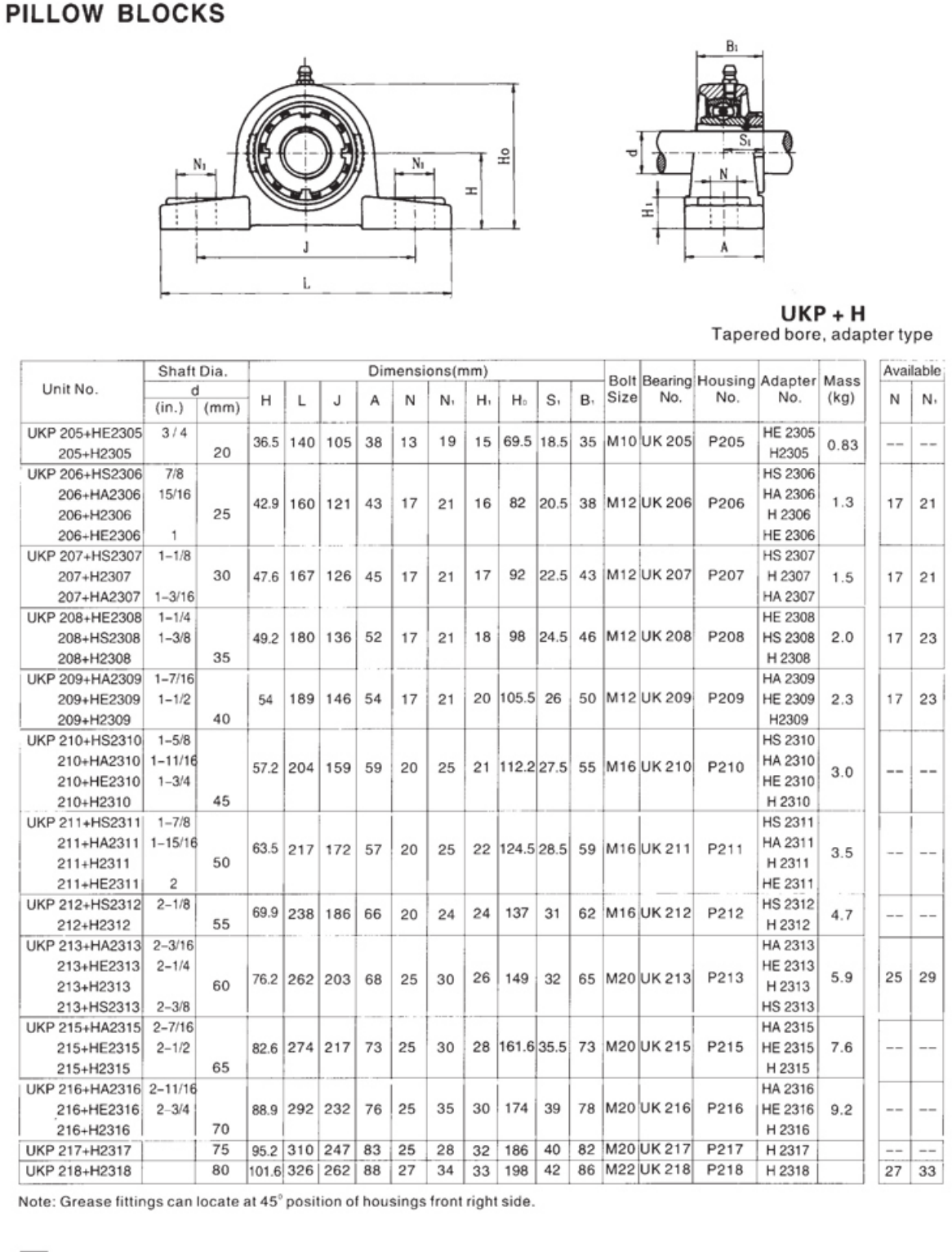
EP-UKP+H units use a tapered insert on an adapter sleeve. This arrangement can be worth reviewing where the shaft design and maintenance method benefit from sleeve mounting and controlled disassembly. Keep spare adapters, nuts and washers identified with the bearing so the maintenance team does not have to improvise hardware in the field.
Recommended family directions by machine position
| Mining position | Family direction to review | Main questions |
|---|---|---|
| Conveyor pulley | EP-UCP / heavier series / take-up as required | Belt pull, shaft size, dust, fixed vs adjustable support |
| Crusher / screener shaft | Eccentric or adapter locking families for review | Shock, vibration, speed, shaft condition |
| Bucket elevator boot | Take-up unit | Travel, contamination, belt alignment |
| Ventilation fan | UCP/UCF with speed-appropriate sealing | Speed, alignment, temperature |
| Remote heavy support | UKP+H or robust pillow-block family as appropriate | Service access, disassembly, spare hardware |
Inspection and spares strategy
Trend vibration and temperature where the plant has condition monitoring. During planned shutdowns, record grease condition, seal damage, shaft movement and mounting-bolt security. Keep the full model, insert, housing, locking hardware and critical dimensions in the spare-parts record; that reduces cross-reference uncertainty when a failure happens away from engineering support.
Heavy-duty selection starts with the failure mode
A mine conveyor bearing that fails from abrasive contamination needs a different corrective action from one that fails because the shaft is loose or the take-up frame is skewed. Before upsizing, inspect the old housing, shaft, seals, grease and mounting bolts. Vibration and temperature trends, when available, help separate gradual bearing damage from a sudden mechanical event.
Series choices by function
| Machine position | Family to review | Primary risk |
|---|---|---|
| Fixed conveyor pulley | Larger EP-UCP or appropriate locking family | Load, dust, vibration, alignment |
| Conveyor take-up | EP-UCT / related take-up family | Frame skew, travel, tension and contamination |
| Vibration-sensitive sleeve arrangement | EP-UKP + H where machine design specifies it | Correct sleeve mounting and service access |
| Shock-loaded auxiliary shaft | Eccentric-lock or heavy housing family as design supports | Shaft fit, shock and loosening |
Plan inspection around access
Remote or guarded positions may justify condition monitoring and controlled spare models because inspection is difficult. Record baseline vibration / temperature after commissioning, inspect seals and mounting movement, and keep approved drawings with the spare. A spare that shares only the bore size is not a controlled replacement.
Need a model checked against your machine? Send the dimensions with your RFQ.