UCP Bearing Torque Specifications: How Tight Should Set Screws and Housing Bolts Be?
Correct torque prevents two opposite problems: a shaft lock that is too loose and slips, or a locking screw tightened so hard that it damages the inner ring or shaft. Housing bolts also need adequate clamping, but they belong to the machine structure and cannot be assigned one universal torque from the bearing bore alone.
UC insert set-screw torque is defined by insert size. Housing-mounting-bolt torque is a separate machine-fastener decision and should come from the machine specification, bolt grade and support material.
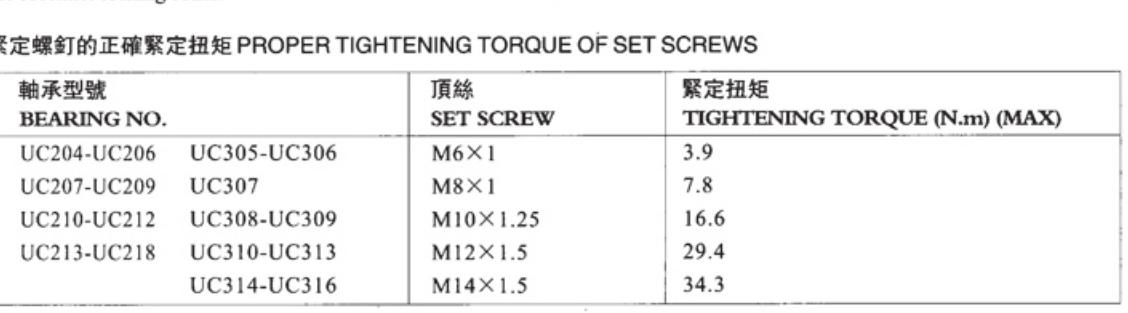
Set-screw torque from the supplied UC table
| Bearing number range | Set screw | Maximum tightening torque |
|---|---|---|
| EP-UC204–UC206 / UC305–UC306 | M6 x 1 | 3.9 N·m |
| EP-UC207–UC209 / UC307 | M8 x 1 | 7.8 N·m |
| EP-UC210–UC212 / UC308–UC309 | M10 x 1.25 | 16.6 N·m |
| EP-UC213–UC218 / UC310–UC313 | M12 x 1.5 | 29.4 N·m |
| EP-UC314–UC316 | M14 x 1.5 | 34.3 N·m |
These values apply to the insert locking screws in the listed series. The pillow-block housing bolt may be a completely different size.
Why under-torque causes problems
If the locking screws are not secure, the inner ring can move relative to the shaft. Fretting, polished shaft marks, loss of axial position and heat can follow. Repeated loosening also deserves a shaft-fit and vibration check; simply applying more torque can hide the underlying problem.
Why over-torque is not safer
Excessive torque can damage the screw threads, mark the shaft severely or distort the locking area of the inner ring. Use a torque wrench rather than relying on the leverage of a long hex key and “feel.”
Housing bolts: use the machine fastener specification
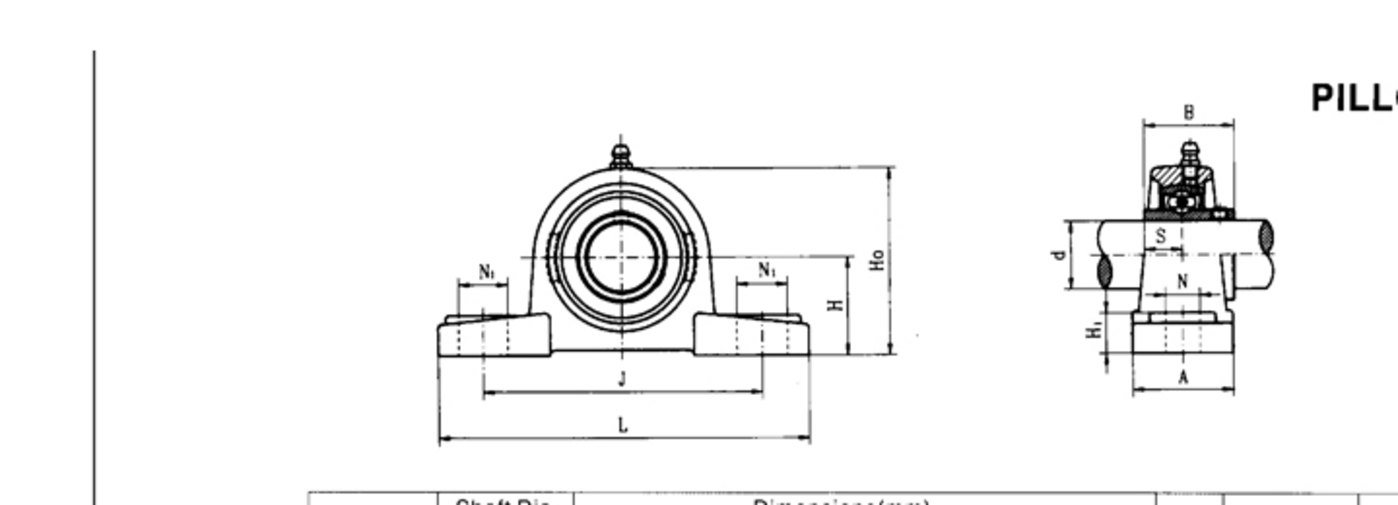
Housing mounting bolts clamp the casting to the machine base. Their correct torque depends on thread size, property class, lubrication, washer arrangement, base material, tapped hole or through-bolt construction and the machine designer’s clamping requirement. Housing bolt size identifies the mounting interface, but size alone is not enough to publish a universal tightening value.
Tools and procedure
- Identify the exact insert series and set-screw size before selecting the torque.
- Use a calibrated torque wrench or torque-controlled hex tool for the insert screws.
- Bring paired bearing supports into alignment before final housing clamping.
- Tighten machine mounting bolts using the approved fastener sequence and specification.
- Rotate the shaft and confirm there is no new binding after the housing is clamped.
Recheck after initial operation
For equipment where the maintenance procedure calls for a post-start inspection, recheck locking and mounting security after the machine has seated and reached operating temperature. Significant loss of torque is not “normal break-in” to ignore; investigate shaft fit, vibration, base movement or fastener condition.
Torque values belong to specific hardware
The set-screw values in the EVER POWER technical table are tied to screw sizes and insert families. Do not transfer the same number to a different screw, thread, material or housing bolt. Housing mounting torque also depends on bolt grade, lubrication, washer condition and the machine’s support material, so use the machine or fastener specification for those bolts.
Use a repeatable tightening process
Clean threads, inspect damaged screws and use a calibrated torque wrench when the value is specified. Bring paired housings into alignment before final base tightening. Apply shaft-locking torque in the required sequence and mark critical fasteners when a maintenance procedure calls for visual movement checks.
Recheck when the machine seats
After initial operation, inspect for housing movement, loose hardware, fretting or abnormal heat. A major loss of torque is not simply “normal settling”; it can indicate damaged threads, an unsuitable shaft fit, vibration or a distorted mounting surface. Correct the cause before increasing torque beyond the specified limit.
Need a model checked against your machine? Send the dimensions with your RFQ.