Y-Bearing Units vs Insert Ball Bearing Units: Are They the Same Thing?
“Y-bearing” is a term strongly associated with SKF’s insert-bearing system, while “insert ball bearing” is the broader descriptive term used across many suppliers. The concepts overlap because both refer to bearings designed for housed-unit applications, often with extended inner rings and spherical outside surfaces, but the names do not prove that two specific models are dimensionally interchangeable.
For a replacement, treat Y-bearing terminology as a clue to the product class and verify the actual insert and housing interface.
What “insert ball bearing” describes
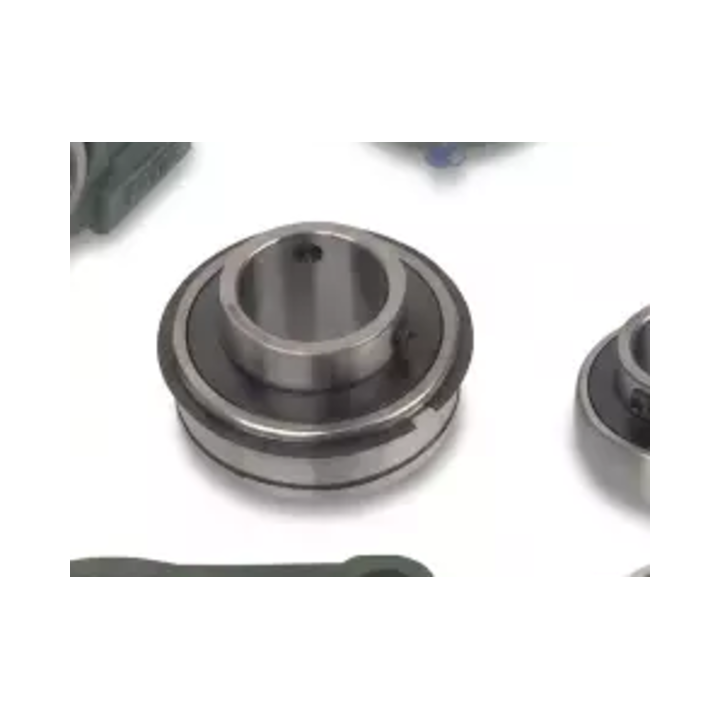
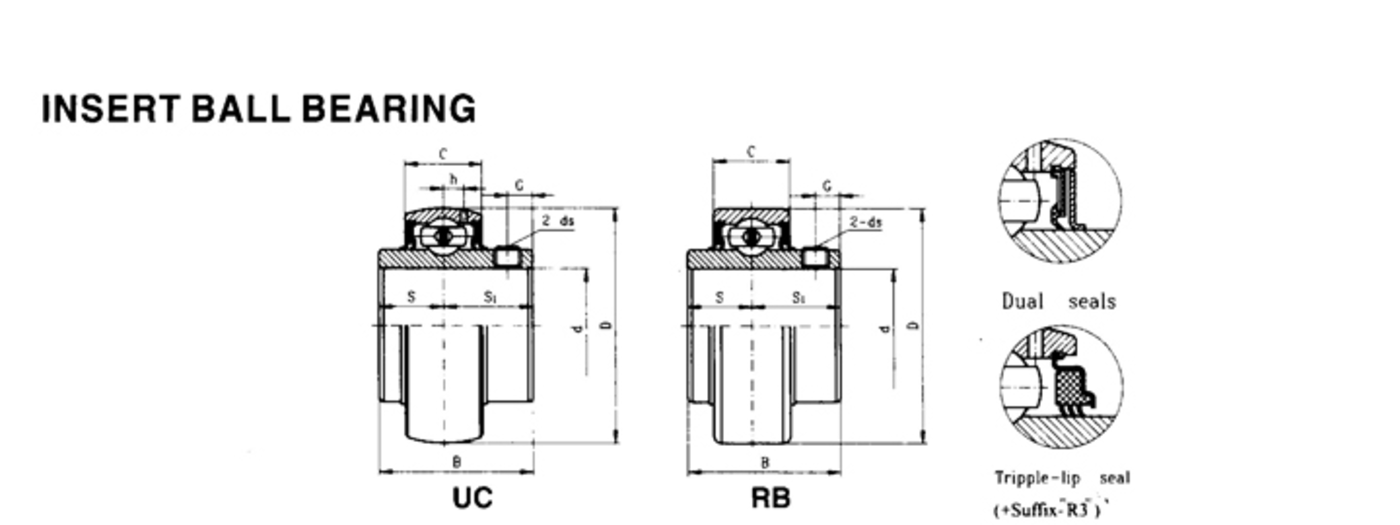
An insert ball bearing is a self-contained bearing designed to work in a housing. The supplied EVER POWER range includes UC set-screw inserts, SA/NA/HC eccentric-locking families, UK tapered-bore inserts and other variants. The outside geometry, width and locking arrangement are part of the model, not optional details.
How Y-bearing terminology is used
SKF uses Y-bearing terminology for its insert-bearing and housed-unit system. A buyer may therefore arrive with a Y-bearing insert code or a complete unit designation. Before cross-referencing, determine which one is being described and preserve all suffix information.
Are Y-bearing and UC models interchangeable?
Do not assume full interchangeability from a similar bore or naming pattern. Compare bore, spherical outside diameter, insert width, locking method, seal arrangement and any anti-rotation feature. For complete housed units, also compare centre height or flange bolt pattern and overall housing dimensions.
How to map the housing concept
| Existing product description | EVER POWER family to review first | Still needs verification |
|---|---|---|
| Base-mounted insert-bearing unit | EP-UCP / related pillow-block family | Bore, H, J, L, locking and seals |
| Four-bolt flange unit | EP-UCF family | Bore, flange size, bolt pitch, projection |
| Two-bolt oval flange | EP-UCFL family | Bore, two-hole spacing and envelope |
| Insert only | EP-UC / SA / NA / UK family as appropriate | OD, width, locking, seals and suffixes |
Why Nordic buyers often use the Y-bearing term
In Sweden and the wider Nordic market, SKF terminology is familiar to engineers and purchasing teams. EVER POWER enquiries can therefore accept the existing Y-bearing or housed-unit reference as identification information, then translate the request into measured dimensions and a candidate EVER POWER family.
Trademark reference notice: SKF and Y-bearing product names are referenced only to help buyers identify and cross-reference existing products. SKF trademarks remain the property of SKF. The reference does not imply affiliation, sponsorship, authorization or endorsement.
Terminology and geometry are different layers
“Y-bearing” is a familiar SKF-oriented term in Nordic markets, while “insert ball bearing” is a generic engineering description used across many suppliers. Those naming systems overlap conceptually, but a buyer should still compare the actual insert and housing dimensions. A familiar name does not make every YAR, UC, FY or UCP-style unit interchangeable.
Cross-reference workflow
Start with the full existing model. Determine whether it identifies the insert, the housing or the complete unit. Measure the bore, insert width, housing footprint / flange pattern and locking method. Then choose the corresponding EVER POWER family and compare drawings. Record the approved EP model only after those checks are complete.
Why the distinction helps Nordic buyers
Keeping both terms in the conversation makes it easier to interpret older maintenance records while still buying from a neutral dimensional specification. The website therefore uses “Y-bearing” for identification where helpful but keeps the technical content in English and avoids asserting automatic equivalence.
On the Y-Bearing Units vs Insert Ball Bearing Units: Are They the Same Thing? page, third-party names are used only to identify an existing bearing, compare references or support product selection. All trademarks and brand names mentioned remain the property of their respective owners. Their appearance here does not imply affiliation, sponsorship, authorization or endorsement. Final replacement selection should be confirmed from dimensions, locking method and the actual machine interface.
Need a model checked against your machine? Send the dimensions with your RFQ.