UCP Bearing for Conveyor Systems: Complete Application and Selection Guide
Conveyors place housed bearings at pulley shafts, sprockets, screws, elevators and tensioning points. Many of those shafts run for long periods with limited maintenance access, so selection is not just a matter of fitting the bore: the housing position, belt pull, alignment, contamination and take-up method determine which bearing-unit family makes sense.
A good conveyor design often uses more than one housing type on the same machine. Fixed supports and adjustable tension points solve different jobs.
Bearing requirements in conveyor duty
Continuous running raises the importance of stable lubrication, temperature and alignment. Belt or chain pull produces radial load, while frame deflection can introduce angular error between supports. Dust, product spill and washdown can dominate bearing life in processing lines even when the calculated mechanical load is moderate.
Belt conveyors: fixed support vs take-up end
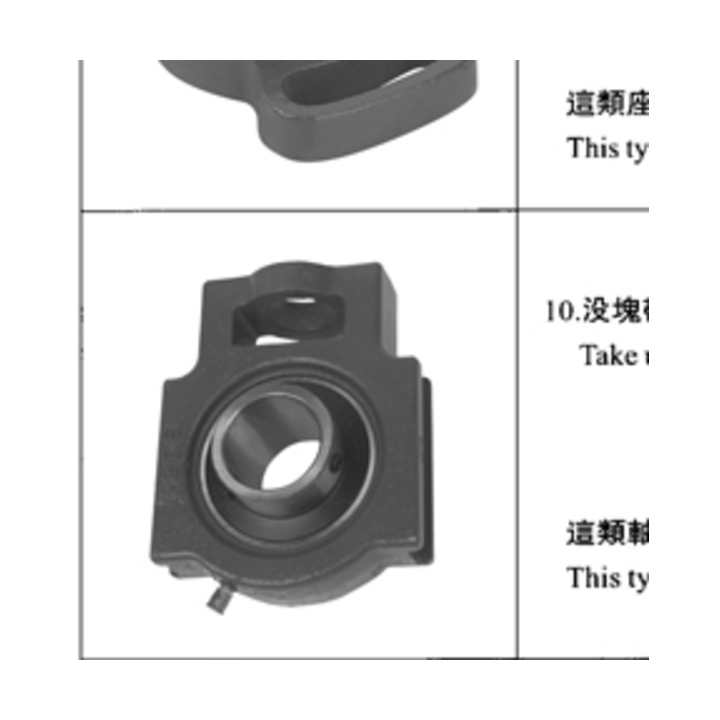
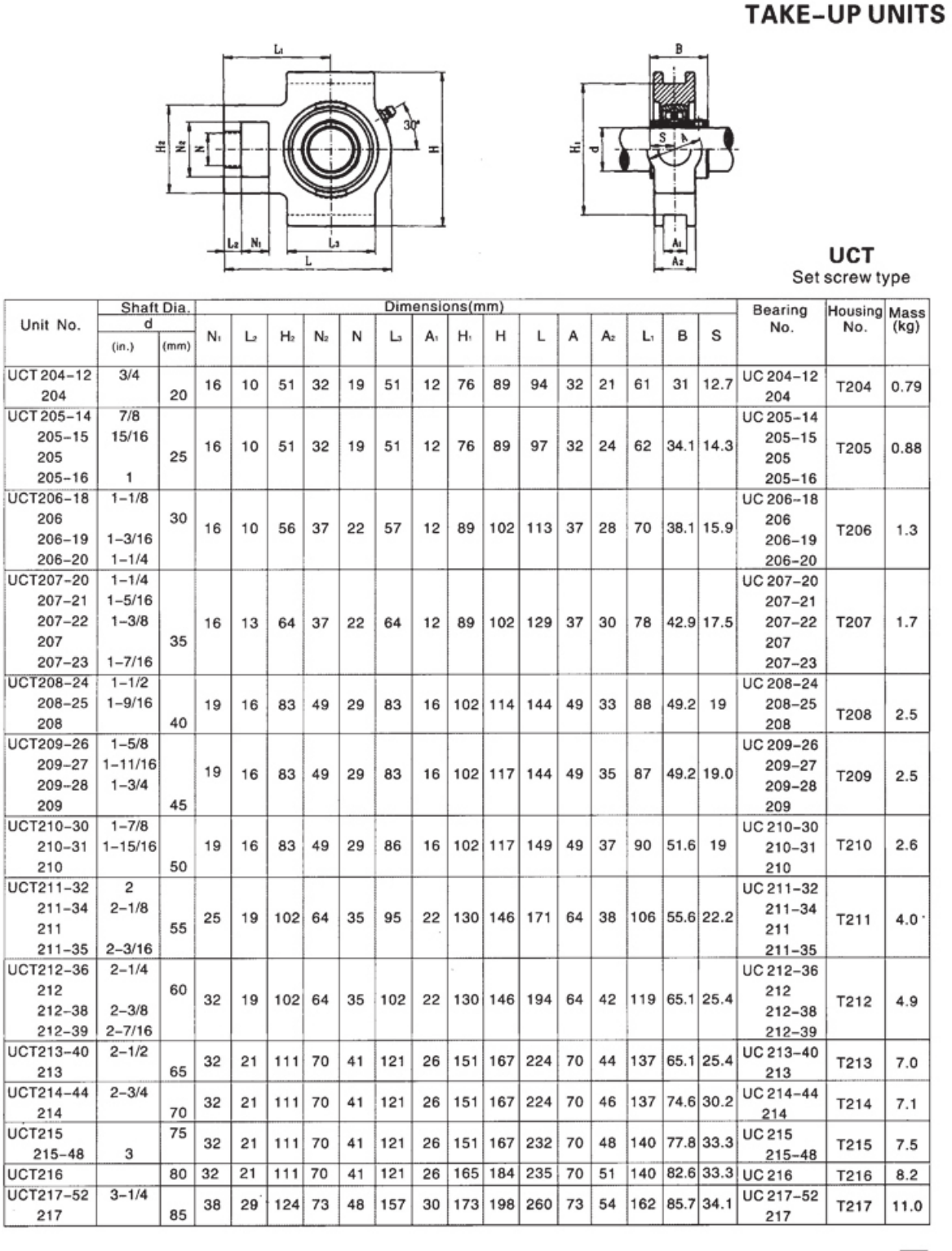
EP-UCP pillow blocks are common starting points for fixed head, tail or intermediate shaft supports where the housing is bolted to a base. At a belt-tension adjustment point, an EP-UCT/NAT-type take-up housing may be more appropriate because it allows the shaft position to move inside the tensioning frame.
Chain and screw conveyors
Chain conveyors require secure sprocket-shaft support and attention to shock during starts or product jams. Screw conveyors may use face-mounted cartridge or flange units at the end plate where a base-mounted pillow block would be awkward. The support form should follow the conveyor frame, not the other way around.
Bucket elevators
Head and boot shafts can combine substantial belt/chain tension with dust and limited access. Take-up function is especially important at the boot where tension is adjusted. Record the adjustment travel and frame dimensions in addition to shaft size when replacing the lower bearing unit.
Recommended starting families by component
| Conveyor component | Starting family | Selection focus |
|---|---|---|
| Fixed pulley shaft | EP-UCP | Bore, centre height, belt pull, contamination |
| Adjustable pulley / take-up end | EP-UCT or NAT family | Frame fit, travel, locking method, belt alignment |
| Screw conveyor end plate | EP-UCFC / flange family | Concentric face mounting and projection |
| Chain conveyor sprocket shaft | EP-UCP / eccentric-locking family for review | Shock, shaft lock and alignment |
| Bucket elevator boot | Take-up family | Travel, dust sealing and service access |
Maintenance checks for long-running conveyors
Trend bearing temperature and vibration if the plant has condition monitoring. During shutdowns, check mounting bolts, shaft-locking screws or collars, grease condition and pulley alignment. A bearing that repeatedly runs hotter on one side of the conveyor may be indicating shaft or frame alignment trouble rather than a lubricant problem.
Map each conveyor bearing position
Do not order every bearing on a conveyor from one model list. Head pulleys, tail pulleys, snub rollers, return rollers, take-up shafts and screw-conveyor ends can use different housings and experience different loads. A simple position map with shaft size and function prevents a take-up housing from being replaced by a fixed pillow block or a face-mounted support from being ordered with a base housing.
Fixed versus adjustable selection
| Position | Primary decision | Candidate family |
|---|---|---|
| Fixed pulley support | Base or face mounting, load and alignment | EP-UCP / EP-UCF / EP-UCFL |
| Take-up pulley | Frame guide and adjustment travel | EP-UCT or corresponding take-up family |
| Screw-conveyor end | End-plate geometry / concentricity | EP-UCFC or flange family |
| Bucket elevator | High duty, dust, access and tensioning role | Fixed or take-up family by position |
Maintenance access is a selection variable
A bearing mounted behind guards or high on an elevator may receive less frequent attention. Record grease fitting access, inspection visibility and the consequences of downtime. These practical details may matter more than a small difference in catalogue size.
Need a model checked against your machine? Send the dimensions with your RFQ.