Pillow Block Bearing for Agricultural Machinery: Selection Guide & Recommended Models
Agricultural bearing points combine several difficult conditions at once: dust, mud, moisture, shock from uneven ground, long seasonal storage and limited time for maintenance during planting or harvest. A bearing that looks adequate on shaft size alone can still fail early if the locking, sealing or service access is wrong for the machine position.
Selection is therefore best done application by application. Start with the shaft and housing interface, then add contamination, shock and lubrication requirements.
Combine harvesters and crop-handling shafts
Threshing, auger and elevator shafts place housed bearings around rotating components that see crop dust and variable load. The planning range points toward EP-UCP208 through EP-UCP212 for 40–60 mm shaft positions and eccentric-collar families where shock is an important selection factor. Confirm the machine drawing because centre height and base spacing increase with bore size.
Balers, pickup rolls and flywheel supports
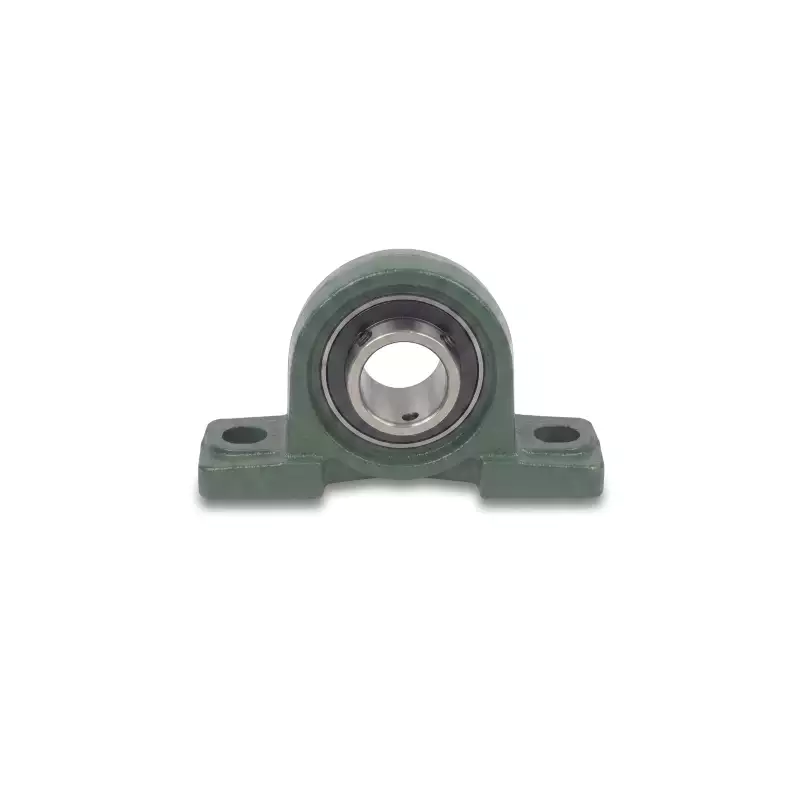
Round and square balers often have compact bearing points around pickup rolls, compression mechanisms and drive shafts. EP-UCP205 through EP-UCP207 are useful size references for 25–35 mm shafts, while an EP-UCFL-type oval flange can fit positions where the machine face is narrow. The actual choice depends on whether the support is base-mounted or face-mounted.
Planters, seed drills and ground-drive wheels
Smaller shafts on seeding and metering equipment often begin around EP-UCP204–EP-UCP206. These locations may not carry the heaviest load in the machine, but dirt ingress, corrosion during storage and loose mounting hardware can still dominate service life.
Tillage equipment and shock-oriented locking
Rotary tillage, subsoilers and related ground-engaging equipment transmit impact and vibration into the shaft supports. The planning framework highlights eccentric-collar NAP/SA-style units as a locking option worth reviewing in those positions. Treat that as a selection direction, not an automatic upgrade: confirm speed, shaft condition and the existing machine geometry.
Disk harrow units are a special product family
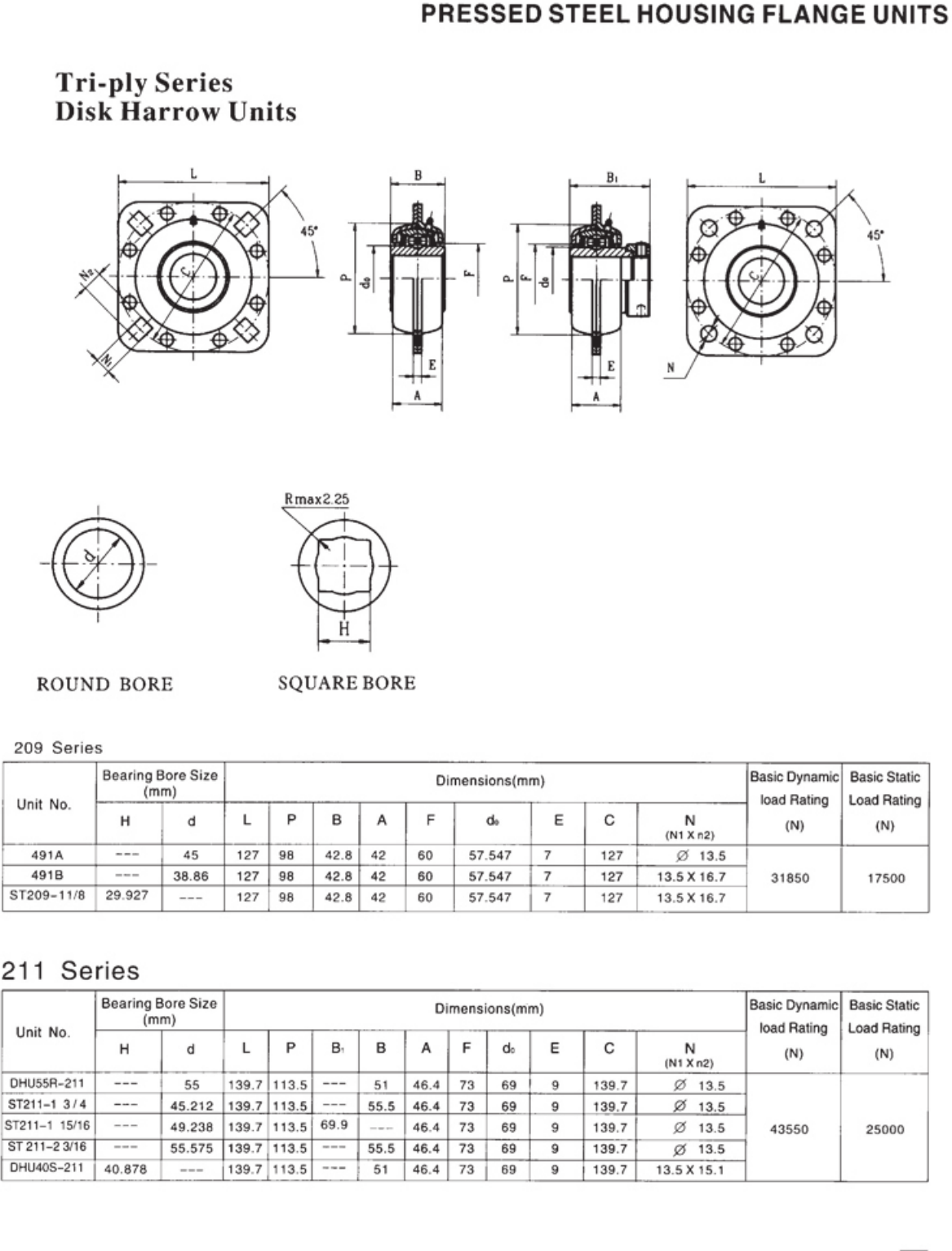
Disk harrow gangs operate directly in dust, soil and wet field conditions. Dedicated 209 and 211 tri-ply disk-harrow units are available with round- and square-bore options. These are purpose-built components and should not be replaced with a generic UCP simply because the shaft or gang bolt appears close in size.
Recommended starting points by machine position
| Equipment position | Starting family / model range | What to confirm |
|---|---|---|
| Combine auger / elevator shaft | EP-UCP208–EP-UCP212 | Shaft, centre height, dust, shock, grease access |
| Baler pickup / drive shaft | EP-UCP205–EP-UCP207 or EP-UCFL206-type face mount | Mounting orientation, bore, bolt pattern |
| Planter / seed drill axle | EP-UCP204–EP-UCP206 | Shaft size, corrosion/storage exposure |
| Tillage shaft | EP-NAP / eccentric-collar family for review | Shock, rotation, shaft surface and housing fit |
| Disk harrow gang | Dedicated 209 / 211 disk-harrow family | Round vs square bore, gang dimensions, sealing |
Maintenance before the season starts
Clean the housing, check mounting bolts, inspect the seal area, confirm the shaft lock and rotate the shaft by hand before returning a stored machine to service. If the unit is relubricated, use a compatible grease and avoid forcing large quantities through a contaminated fitting. Record the installed model and take a clear photo while access is easy; that information is valuable when a replacement is needed during the season.
Seasonal duty changes maintenance priorities
Agricultural equipment may run intensely for a short harvest period and then sit for months. Inspection therefore needs two moments: immediately after the season, when dirt and failure clues are still visible, and before the next season, when corrosion, seal condition and grease paths can be checked. A bearing that felt acceptable at shutdown can still deteriorate during storage if water remains around the housing or shaft.
Match the bearing position, not just the machine
A combine or baler can contain several bearing-unit types. A pickup roll might use a compact flange; an auger shaft might use a pillow block; a tensioning position might require a take-up unit. Use the model ranges in the guide as dimensional starting points, then confirm each shaft and housing position separately.
Failure information improves the next selection
When a farm bearing fails, record whether the symptom was contamination, seal damage, a loose insert, cracked housing, overheating or shaft wear. Photos of mud paths and the damaged seal can be more valuable than the old part number alone. The replacement decision can then address the cause instead of simply installing the same unit into the same conditions.
Need a model checked against your machine? Send the dimensions with your RFQ.