Pillow Block Bearing Units for Canada | Metric & Inch Selection
English-language product selection and RFQ guidance for local machinery buyers.
Canadian machinery can combine North American inch-shaft conventions with metric equipment imported from Europe or Asia. That mix makes measurement more important than assumptions. Agriculture, forestry, mining and food-processing equipment all use housed bearing units, but the appropriate family depends on shaft size, mounting orientation, contamination and the way the insert is locked to the shaft.
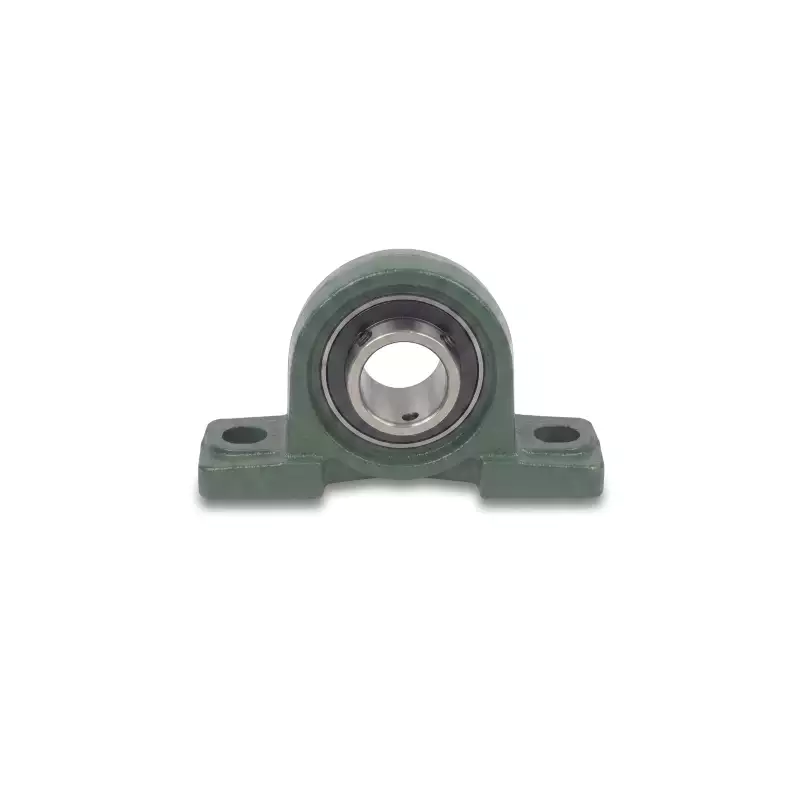
Terminology and product identification
All public copy remains English. Product references may use UCP-style codes, generic “mounted bearing” terminology or brand-specific North American numbers; each is treated as an identification clue until dimensions are checked.
Industries and bearing-unit decisions
| Industry | Typical equipment | Series to review | What to confirm |
|---|---|---|---|
| Agriculture | Combines, balers, grain conveyors and farm equipment | EP-UCP, flange and eccentric-lock families | Inch/metric shaft, dust, moisture and seasonal use |
| Forestry | Feed systems, sawmill auxiliaries and conveyors | EP-UCP, EP-UCT and flange families | Shock, debris and maintenance access |
| Mining | Conveyors and screening auxiliaries | Larger pillow blocks and take-up families | Abrasive contamination, vibration and frame stiffness |
| Food processing | Conveyors and packaging equipment | Plastic-housing or corrosion-sensitive options | Cleaning medium and lubricant requirement |
Confirm inch versus metric before model selection
Record the shaft with a calibrated measuring tool and do not convert a close metric size into an inch code. Then check centre height / bolt spacing for a pillow block or flange pitch for a UCF/UCFL-style unit. If the replacement is in a take-up frame, measure the guide width and adjustment geometry as well as the bore.
RFQ information for Canadian distributors and OEMs
Include the end use, existing model, measured interface, quantity and required documentation. If the unit is for forestry or mining, describe shock and contamination. If it is for food equipment, describe washdown and cleaning conditions. This lets the selection focus on the machine rather than a generic country specification.
Where to start in the EVER POWER range
EP-UCP and EP-UCF / EP-UCFL cover the most common fixed housings in this project. EP-UCT is the starting family for adjustable conveyor positions; EP-UC is used when only the insert bearing is being replaced.
For Canadian projects, use the dimensional tables as a screening tool, then confirm the exact ordered configuration from the machine interface and duty. When a third-party model number is supplied, it is treated as an identification input rather than proof of exact compatibility.
Frequently asked questions
Do Canadian buyers need inch-bore units?
Some do, while other equipment is metric. Measure the actual shaft and send the complete current reference.
Is the Canada page bilingual?
No. The website remains English-only across all market pages.
Can I replace only the insert bearing?
Potentially, if the housing is serviceable and the insert geometry matches. Send housing and insert measurements for review.
Request a market-specific bearing quote
Send the model or current reference, shaft diameter, housing dimensions, application, quantity, destination and any drawing or documentation requirements.