Pillow Block Bearings for Pumps, Fans & Blower Shaft Support
Application-based bearing unit selection from actual shaft, mounting and duty conditions.
Pump, fan and blower applications can look simple because the bearing often supports a straight shaft, but speed, alignment and mounting stiffness quickly become important. A base-mounted fan shaft may use a pillow block, a machine side plate may require a flange unit, and a compact bracket may call for a UCFB-style housing. The bearing unit must also fit around guards, couplings and adjacent drive components.
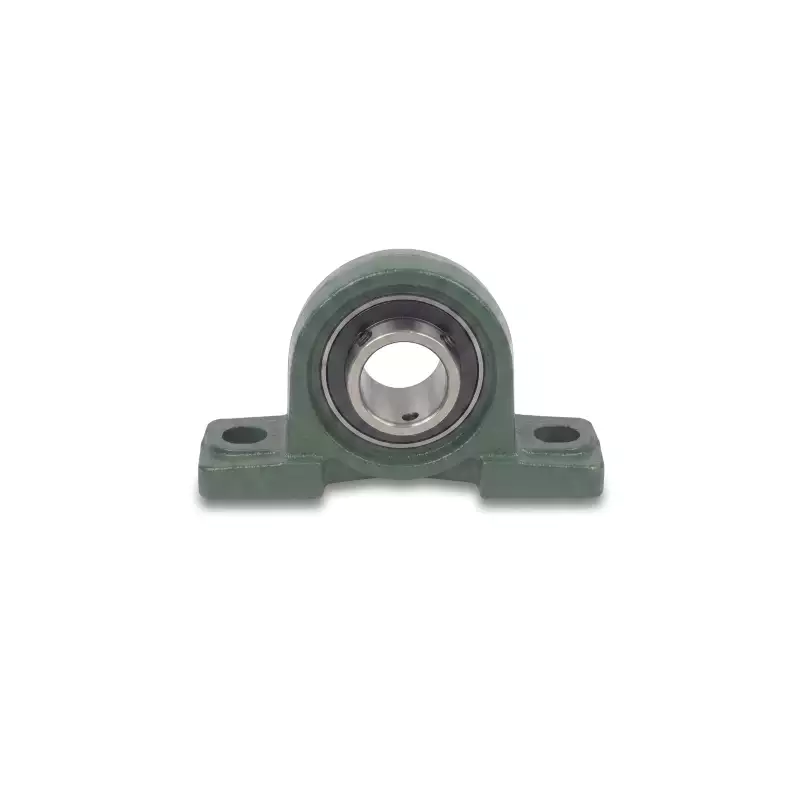
Typical machine positions and series to review
| Equipment / process | Bearing position | Series to review | Key selection checks |
|---|---|---|---|
| Centrifugal fan / blower | Drive and non-drive shaft supports | EP-UCP for base mounting; EP-UCF / EP-UCFL for face mounting | Speed, alignment, vibration and guard clearance |
| Pump auxiliary shaft | Support positions outside integral precision bearing arrangements | Flange or pillow-block unit if machine design permits | Shaft load, coupling alignment and sealing environment |
| Compact side bracket | One-side or bracket-mounted shaft support | EP-UCFB-style flange bracket where geometry matches | Bolt pattern, bracket stiffness and shaft projection |
| Adjustable fan / drive frame | Positions requiring centre-distance adjustment | EP-UCT / UCST-type take-up family where frame is designed for it | Guide geometry, travel and alignment |
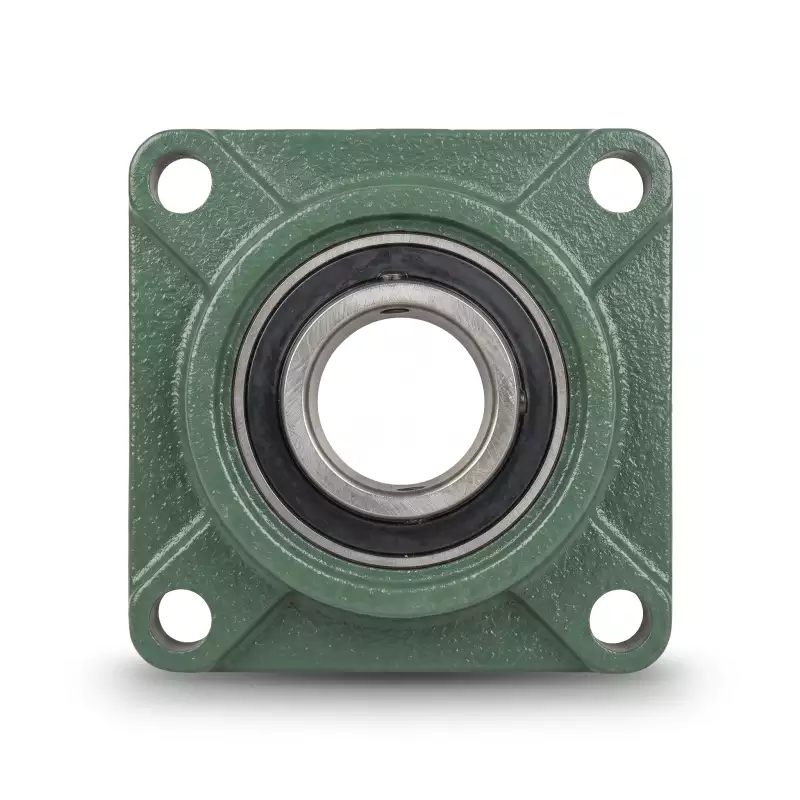
Alignment and mounting orientation drive the housing choice
Use an EP-UCP when the shaft is parallel to a stable base and a two-bolt foot suits the layout. Use EP-UCF or EP-UCFL for face mounting where flange geometry fits, and consider a UCFB-style bracket only when the frame provides the matching support. If the original pump or fan uses precision bearings inside an integral housing, a housed insert unit may not be an appropriate substitute at all.
Installation and integration checks
On pumps and blower systems, installation details need to be checked at the actual shaft position: confirm the shaft is clean and within the fit required by the selected locking method. Mounting faces should be flat enough to avoid forcing the housing out of alignment. Check bolt and wrench access, guards, adjacent couplings or sprockets, grease access and whether thermal movement or frame deflection can change alignment in service. A bearing unit cannot correct severe shaft bend or a distorted machine frame.
Maintenance and failure feedback
After installation, rotate the shaft by hand where safe and confirm there is no binding from misaligned housings. Monitor vibration and temperature during commissioning. Repeated fan vibration can be caused by imbalance, coupling problems or structural flexibility rather than the bearing itself, so diagnose the rotating system before changing bearing size or locking method.
What to include in the RFQ
For bearing enquiries involving pumps and blower systems, send the machine type, current bearing model, shaft diameter, base or flange dimensions, locking method, speed/load information if available, environment, quantity and photos or drawings of the installed position. If the old unit failed, include the observed failure mode.
Frequently asked questions
Can a UCFB-style bearing replace a square UCF?
Only if the machine bracket, bolt pattern, shaft position and load path are designed for that housing. The shapes are not interchangeable by name alone.
Is a pillow block suitable for every pump shaft?
No. Many pumps use dedicated precision bearings and integral housings. Use a housed insert unit only where the machine design calls for that type of support.
What should a fan-shaft RFQ include?
Shaft diameter, speed, housing / bracket dimensions, existing model, coupling and guard constraints, quantity and vibration or environmental information.
Discuss your application
Share the shaft, mounting interface and operating conditions so the proposed bearing family can be checked against the machine.