Insert Ball Bearing Explained: UC, SA, NA and HC Series — What Is the Difference?
An insert ball bearing is the replaceable bearing element used inside many pillow-block, flange and take-up housings. Unlike a standard bare deep-groove bearing mounted in a machined housing, an insert typically has a spherical outside surface for the matching housed-unit seat and an extended inner-ring arrangement for shaft locking.
UC, SA, NA, HC, SER, ER and UK codes describe different insert families. They should be compared by bore, outside geometry, width, locking method and the housing they are intended to work with.
UC series: standard set-screw insert
EP-UC is the main set-screw family in the supplied range. Two set screws on the extended inner ring secure the bearing to the shaft. The spherical outside surface allows the insert to align within its matching housing seat, and the bearing can be supplied as part of UCP, UCF, UCFL, UCFC and other housed-unit formats.
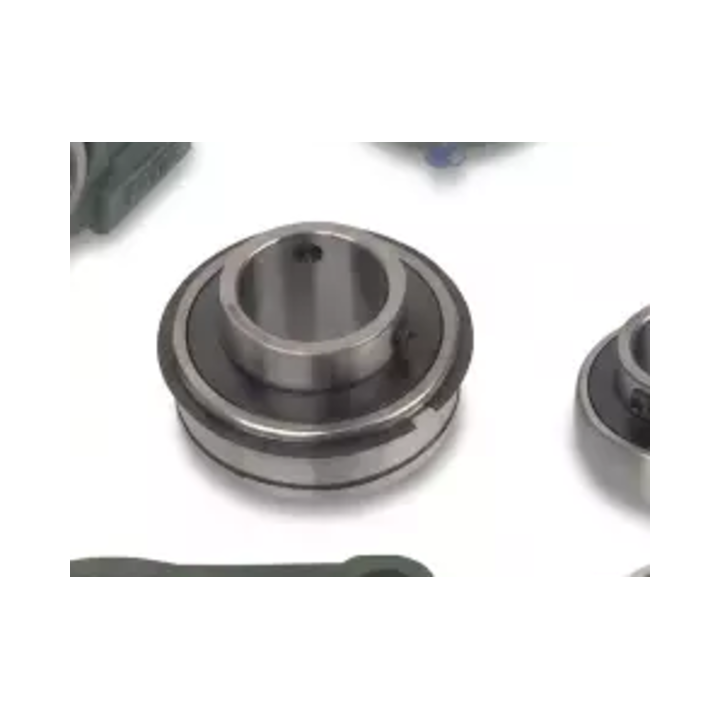
SA, NA and HC: eccentric-collar families
SA, NA and HC-style inserts use eccentric locking geometry rather than the two-screw UC method. They work with a matching eccentric collar. The family code therefore describes more than a marketing name: it changes the hardware and the installation procedure used to secure the shaft.
When replacing one of these inserts, keep the collar number and complete suffix with the enquiry. A bore match is not enough if the insert width, eccentric extension or outside geometry differs.
SER and ER: inch-oriented references
SER/ER families appear in the product range as additional insert-bearing forms, particularly relevant where North American inch shaft sizes are used. Confirm the exact geometry and housing relationship rather than assuming the family is a direct UC substitute.
UK series: tapered bore with adapter sleeve
EP-UK uses a tapered bore and mates with an H-series adapter sleeve. The adapter creates the shaft connection and is secured by its locknut/washer arrangement. This is a different mounting concept from both UC set screws and eccentric collars.
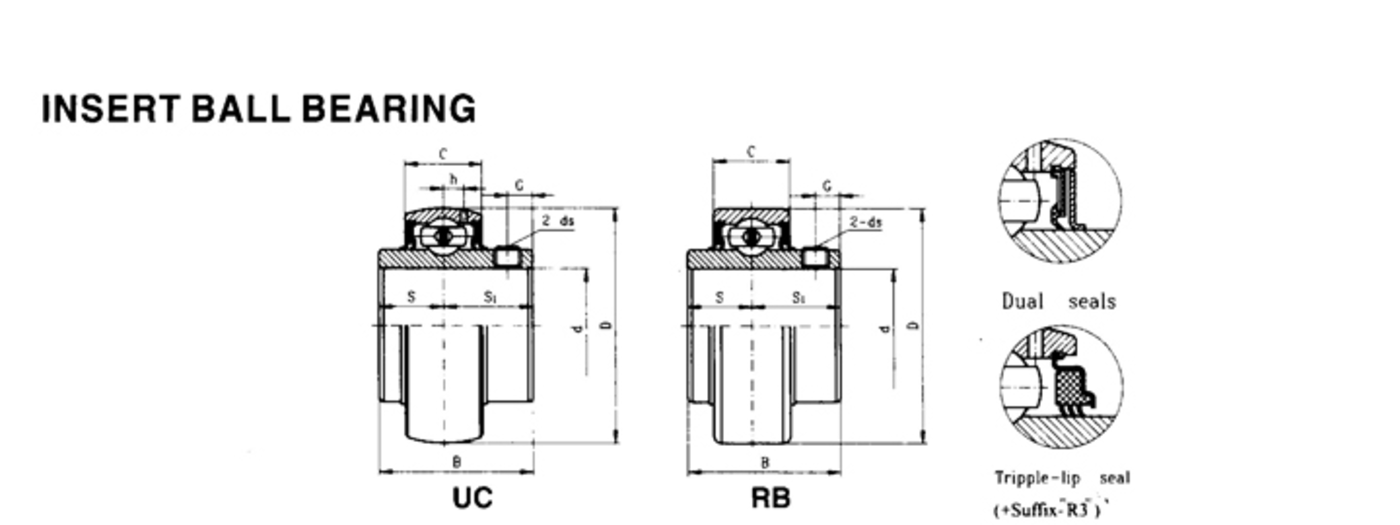
CS-2RS cylindrical-OD family
CS-2RS cylindrical-OD bearings are also available. These are used where the outside of the bearing is not the spherical self-aligning interface found on typical insert units. That difference matters when a buyer is replacing the insert separately from the housing.
Quick comparison
| Family | Bore / OD concept | Locking method | Selection note |
|---|---|---|---|
| EP-UC | Straight bore, spherical OD | Two set screws | General housed-bearing insert |
| EP-SA / NA / HC | Straight bore, housed-bearing insert geometry | Eccentric collar | Keep collar and rotation direction in installation plan |
| SER / ER | Often used in inch-oriented selections | Family specific | Verify complete dimensions and housing |
| EP-UK | Tapered bore, spherical OD | H-series adapter sleeve | Select bearing and adapter together |
| CS-2RS | Cylindrical OD | Configuration specific | Not the same self-aligning housing interface as UC |
The housing interface matters as much as the shaft
UC, SA, NA, HC, SER/ER and UK families are not merely different names for the same insert. Locking method, ring geometry and the interface with the housing can change. When replacing only the insert, measure the old insert and identify the housing model so the spherical outer interface and retaining features can be checked.
Use the locking family as a controlled design choice
| Insert family concept | Locking approach | Selection cue |
|---|---|---|
| EP-UC | Set screws on the wide inner ring | Common general housed-bearing arrangement |
| EP-SA / EP-NA / EP-HC | Eccentric-collar family | Use where the existing shaft arrangement and collar system match |
| EP-UK | Tapered bore with adapter sleeve | Use with the specified sleeve / nut arrangement |
| SER / ER-type family | Variant / inch-oriented insert systems | Confirm exact dimensions and housing fit |
Insert-only replacement checklist
Inspect the housing bore and anti-rotation feature, verify the shaft is not worn, compare the old and proposed insert widths, check seal clearance and confirm the locking hardware. If the old insert has spun in the housing or on the shaft, replacing the insert alone may not solve the root cause.
Need a model checked against your machine? Send the dimensions with your RFQ.