Pillow Block Bearings for Conveyor Systems | Take-up & Support Units
Application-based bearing unit selection from actual shaft, mounting and duty conditions.
Conveyors place bearing units in two very different roles: fixed shaft support and adjustable tensioning. A head or tail pulley may need a rigid pillow block, while a take-up position must slide in a frame and maintain belt tension. Screw conveyors add concentricity and end-support questions, and bucket elevators add contamination, vertical duty and difficult maintenance access.
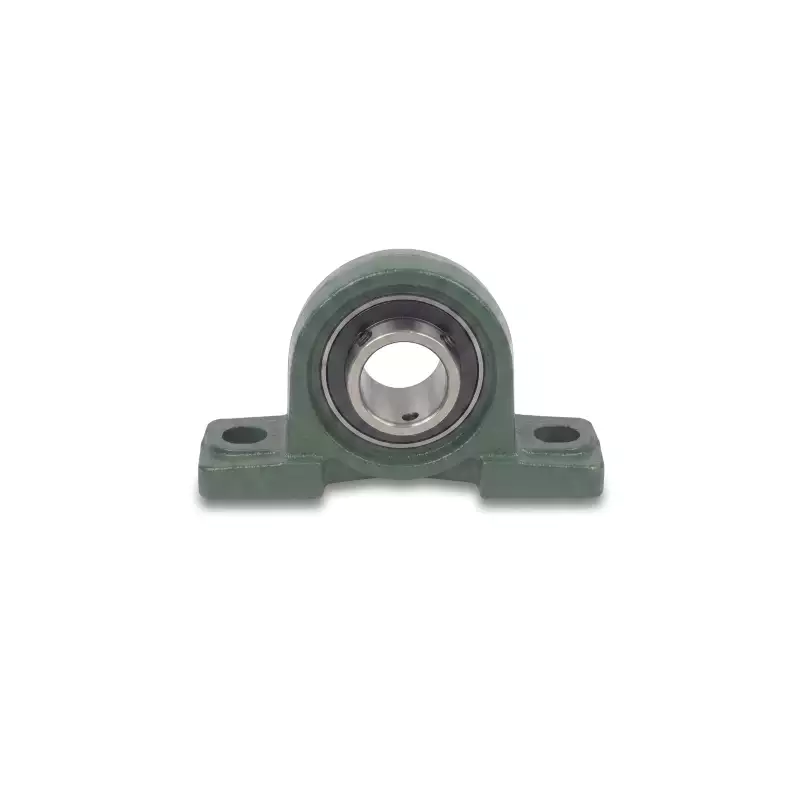
Typical machine positions and series to review
| Equipment / process | Bearing position | Series to review | Key selection checks |
|---|---|---|---|
| Belt conveyor | Head, tail, snub and return pulley shafts | EP-UCP for fixed supports; EP-UCT / NAT / UCK families for take-up positions | Shaft diameter, pulley load, frame alignment and adjustment travel |
| Chain conveyor | Drive and idler sprocket shafts | EP-UCP or flange family | Shock, chain pull, guarding and lubrication access |
| Screw conveyor | Drive-end and tail-end support | EP-UCFC or flange family where circular / face mounting fits | Concentricity, end-plate geometry and contamination |
| Bucket elevator | Head and boot shafts | EP-UCP / EP-UCT family depending on fixed or tensioning function | High duty cycle, dust, vertical access and belt tensioning |
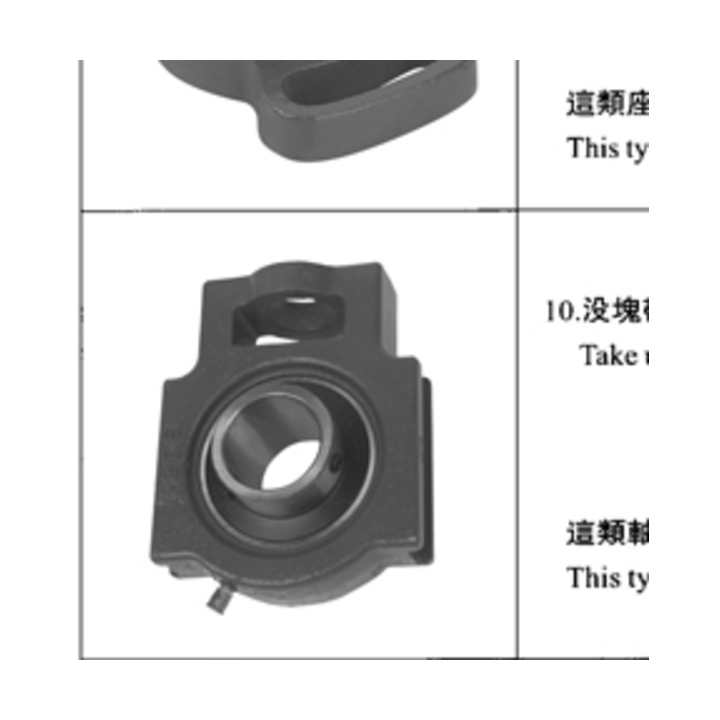
Fixed support versus take-up is the first conveyor decision
A take-up unit cannot be selected by bore alone. Measure the frame channel, guide width, housing height and the usable adjustment travel in addition to the shaft. For fixed pillow blocks, check base bolt spacing and centre height. Larger head-pulley positions may lead the buyer toward the upper UCP200-series sizes, but actual bearing load and speed must be calculated or confirmed from the machine design.
Installation and integration checks
On conveyor systems, installation details need to be checked at the actual shaft position: confirm the shaft is clean and within the fit required by the selected locking method. Mounting faces should be flat enough to avoid forcing the housing out of alignment. Check bolt and wrench access, guards, adjacent couplings or sprockets, grease access and whether thermal movement or frame deflection can change alignment in service. A bearing unit cannot correct severe shaft bend or a distorted machine frame.
Maintenance and failure feedback
Conveyor bearing issues often show up as rising temperature, seal contamination, housing movement or abnormal noise before complete failure. Check alignment after structural work, belt tracking changes or a pulley replacement. At take-up positions, inspect both bearing condition and the sliding frame: a seized or skewed take-up can impose loads that a new bearing alone will not correct.
What to include in the RFQ
For bearing enquiries involving conveyor systems, send the machine type, current bearing model, shaft diameter, base or flange dimensions, locking method, speed/load information if available, environment, quantity and photos or drawings of the installed position. If the old unit failed, include the observed failure mode.
Frequently asked questions
When should I use EP-UCT instead of EP-UCP?
Use a take-up family when the bearing housing must move in a frame to set or maintain tension. EP-UCP is a fixed base-mounted support.
Is EP-UCFC automatically better for screw conveyors?
Not automatically. It can be useful where the machine requires circular flange mounting and concentric support; the actual end-plate geometry must be confirmed.
What should I send for a conveyor RFQ?
Shaft diameter, pulley or screw position, fixed/take-up function, housing dimensions, duty cycle, contamination, quantity and photos or drawings of the mounting frame.
Discuss your application
Share the shaft, mounting interface and operating conditions so the proposed bearing family can be checked against the machine.